There are some lessons medicine teaches you that never appear in a textbook.
Looking after older patients for more than thirty years has taught me one of the most important. We spend much of our professional lives diagnosing disease, prescribing medication and treating illness, but increasingly I’ve come to realise that healthy ageing isn’t simply about avoiding disease. It is about protecting something far more precious.
For me, healthy ageing has never been about adding years to life. It has always been about preserving the quality of those years.
Why independence matters
One of the saddest parts of being a GP has been watching people gradually lose it. Rarely does it disappear overnight. More often it slips away so quietly that neither the patient nor their family notice at first. A chest infection one winter takes a little longer to recover from. A fall knocks confidence. A short stay in hospital after a urine infection leaves someone weaker than before. Another illness follows a year later and, although each problem is treated successfully, the person never quite returns to where they started.
Over time, their baseline changes.
Someone who once walked everywhere begins avoiding hills. Shopping becomes tiring. Stairs become something to think about rather than something they simply do. Driving stops. Friends are seen less often. Confidence gradually gives way to caution and, almost without anyone recognising the moment it happened, someone who had lived independently for decades begins depending on other people.
That pattern is one I have seen countless times throughout my career. It has also shaped the way I think about medicine.
What I’ve learned
One of the greatest lessons general practice has taught me is that how well we recover from illness often depends on how healthy and resilient we were before we became ill and the mindset we bring to our recovery.
Hospital care saves lives every single day and, when it is needed, there should never be any hesitation in accepting it. I have enormous admiration for colleagues working in hospitals. They care for people during some of the most frightening moments of their lives, often under extraordinary pressure. But hospitals are also difficult places for older people.
Not because of the people who work in them.
Quite the opposite.
The doctors, nurses, therapists, healthcare assistants, porters and support staff I have worked alongside throughout my career are some of the most dedicated people I know. The reality, however, is that hospitals are designed to treat acute illness rather than preserve independence. Staff are constantly balancing competing priorities and there are simply never enough hours in the day.
Research has shown that muscle loss and physical deconditioning can begin within just forty-eight hours of bed rest. In older adults, around ten days of immobility may result in muscle loss equivalent to many years of normal ageing. Up to sixty per cent of older adults experience some degree of functional decline after a hospital admission. Often it isn’t the illness itself that changes the course of someone’s life, but the loss of strength, confidence and independence that follows.
Those weren’t simply statistics to me.
They influenced many of the decisions I made when caring for my own parents.
My mother suffered a stroke at the beginning of the COVID pandemic. Like so many families at that time, we suddenly found ourselves separated by visiting restrictions. I couldn’t sit by her bedside or reassure her in person and, instead, became one of those relatives who telephoned the ward far more often than was probably reasonable. I’m sure the nurses recognised my voice before I had even introduced myself, but making those calls was the only way I felt I could still look after her.
When the day finally came to collect her, I was expecting to find a frightened little lady desperate to come home.
Instead, I found her chatting happily to everyone in the room.
She had somehow made friends with the other patients, knew members of staff by name and seemed particularly fond of the porter who wheeled her downstairs to meet me. I remember feeling enormous relief when I saw her, while she looked at me almost as though to say, “What have you been worrying about?”
That was Mum.
She wasn’t loud or particularly outspoken, but she possessed an extraordinary quiet strength. We’d always known how determined she was. She simply took life in her stride. Looking back, the only thing that ever truly knocked her was losing Dad. Until then, whatever life threw at her, she quietly got on with it.
When she came home she needed a Zimmer frame and the stroke had left her left arm weak. We started rehabilitation almost immediately and, four times a day, worked through her exercises together. Progress wasn’t dramatic, but little by little she became steadier on her feet, strength returned to her arm and eventually the Zimmer frame was no longer needed.
She accepted help when she genuinely needed it, with frustration sometimes but always gracefully.
She just never wanted to depend on it any longer than necessary.
Later that same year my father developed severe urosepsis. Initially I managed him safely at home, but when his blood sugars rose dramatically and it became clear that he was septic, and in urinary retention, hospital was the only safe place for him.
Once again, I became one of those relatives.
Every day I went to see him and was there outside visiting hours without being asked to leave. Being a doctor helped me to do that. I sat with him while he ate because I knew good nutrition would help his recovery. I encouraged him to drink because dehydration would only make things harder. Most importantly, I walked him.
Not because I thought the staff weren’t doing enough.
Quite the opposite.
They were working incredibly hard looking after many very sick patients and simply didn’t have the time to spend half an hour walking around the ward with one man.
I did.
Because I knew exactly what happens when an older person remains in bed.
Dad had never had a urinary catheter before and walking felt awkward and uncomfortable, but every extra day spent lying down would make it harder for him to recover once he came home. The large muscles at the front of our thighs, the quadriceps, allow us to stand from a chair, climb stairs, get on and off the toilet and recover our balance if we stumble. They are, in many ways, the muscles of independence. Once they weaken, confidence often weakens with them.
Walking Dad around the ward wasn’t about helping him get a little exercise.
It was about protecting his future.
What my parents reinforced, and what I witnessed repeatedly throughout my years in general practice, was that healthy ageing begins long before we become old.
We often think of ageing as something that simply happens to us, but much of the reserve we rely upon in later life is built over decades. We cannot control everything. Genetics play a part, chance plays a part and some diseases are simply cruel. None of us is guaranteed perfect health. But there is a great deal that we can influence, and perhaps the greatest investment we can make is preserving our muscle.
The Muscle Game
We tend to think of muscle as something that matters to athletes or bodybuilders, yet it becomes increasingly important with every passing decade. From around the age of thirty we all begin to lose muscle mass naturally in a process known as sarcopenia. Unless we actively work to preserve it, that loss accelerates as we grow older.
Muscle is far more than something that helps us lift heavy objects. It supports our joints, protects our bones, improves balance, improves insulin sensitivity, helps regulate blood sugar and increases our resting metabolic rate. More importantly, it provides the reserve we rely upon when illness strikes. Someone who goes into hospital with good muscle mass has far more to lose than someone who has already become frail.
The quadriceps muscles deserve a special mention. These large muscles at the front of our thighs allow us to stand from a chair, climb stairs, get in and out of a car and recover our balance if we trip. They are, in many ways, the muscles of independence. Once they begin to weaken, confidence often disappears with them. People naturally become less active because they worry about falling, but becoming less active causes those muscles to weaken even further. Before long, a vicious cycle develops.
Fortunately, maintaining strength doesn’t require expensive equipment or hours in the gym. One of the simplest exercises is also one of the most effective. Sit in a chair and stand up without using your hands if you can. Repeat it ten times. If you need to push off the arms of the chair to begin with, that’s perfectly acceptable. The aim isn’t perfection. The aim is simply to become a little stronger than you were yesterday.
Likewise, resistance training doesn’t have to be complicated. Resistance bands are inexpensive and easy to use. A couple of tins from the kitchen cupboard work perfectly well as light weights. The objective isn’t to build impressive muscles. It is to give your muscles a reason to stay.
Keeping active should never be confined to formal exercise sessions. Walking remains one of the best forms of activity we have, but gardening, carrying shopping, climbing the stairs or playing with grandchildren all count. One of my favourite suggestions to patients is perhaps the simplest of all. Put the radio on while you’re cooking and dance around the kitchen. It sounds almost too simple to matter, yet it raises your heart rate, improves balance and coordination and almost always leaves people smiling. Exercise should be something we enjoy rather than another task to tick off.
Feed Yourself Well
Nutrition is equally important. As we age our appetite often decreases at exactly the time our bodies need more protein to preserve muscle. Many older people, particularly those living alone, gradually eat less without really noticing. Every meal is an opportunity to nourish your muscles as well as satisfy your hunger. Combined with vegetables, fruit, wholegrains and healthy fats, adequate protein provides the building blocks our bodies need to repair and recover.
Hydration deserves attention too. Dehydration contributes to dizziness, constipation, confusion, urinary tract infections and falls, all of which can begin the downward spiral that ultimately results in hospital admission. Drinking enough water sounds deceptively simple, but it is one of the easiest ways of supporting healthy ageing.
I also believe we underestimate the importance of metabolic health. Reducing refined sugars and ultra-processed foods, maintaining a healthy weight and staying physically active all reduce the risk of conditions such as type 2 diabetes, fatty liver disease and cardiovascular disease. More importantly, they preserve the reserve our future selves may one day depend upon.
Healthy ageing, however, is about much more than looking after our bodies.
Keep Your Mind Active
When I think about my parents, I don’t only remember Mum’s determination after her stroke or Dad walking around the hospital ward. I remember the ordinary things that quietly filled their days.
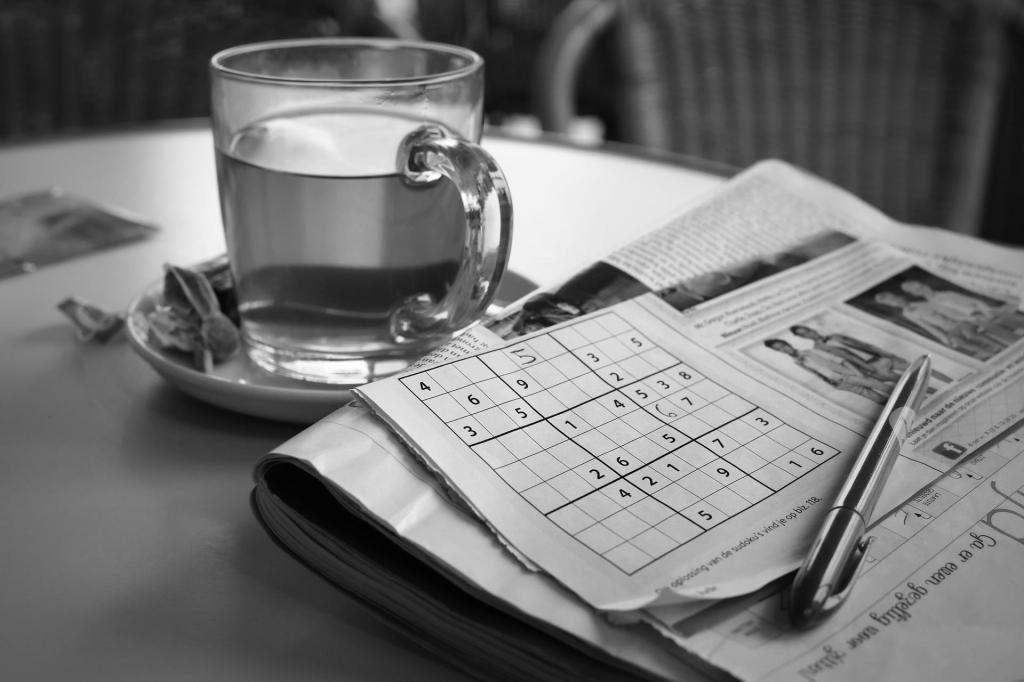
Dad rarely missed his daily Sudoku. His mental arithmetic was extraordinary and his memory for dates amazed all of us. He could tell you exactly what we’d done on family holidays decades earlier, often recalling events day by day as though they had happened only yesterday.
Mum approached life differently. Every day she settled down with her newspaper and read every page. She made us laugh because she was almost always a day behind. She refused to start today’s paper until she had finished yesterday’s, so there was usually a neat pile waiting to go into the recycling. If she found an article she thought I or one of the grandchildren would enjoy, she’d carefully cut it out and save it for us.
Looking back, I don’t think either of them realised they were doing anything particularly special.
They were simply living their lives.
Yet those ordinary routines kept them mentally engaged, curious about the world around them and interested in what tomorrow might bring.
Don’t underestimate loneliness
One of the saddest things I encountered as a GP wasn’t disease itself but loneliness. Time and again I met older patients who had gradually become isolated. A spouse had died. Children had moved away. Friends became fewer. Life quietly became smaller. Bereavement, particularly in later life, affects far more than our emotional wellbeing. Appetite often declines, physical activity reduces, sleep is disturbed and people can lose their sense of purpose almost overnight.
Mindset doesn’t cure disease, and it would be wrong to suggest that it does. But it influences how we respond to illness. My parents never adopted the sick role. They accepted help whenever they genuinely needed it, but neither of them wanted illness to become their identity. If they could regain a little independence, they did. They concentrated on what they could still do rather than what they had lost most of the time.
As medicine has advanced, we have become increasingly good at diagnosing disease and treating it. We have better scans, more sophisticated blood tests and more effective treatments than ever before. These advances have transformed lives, but I sometimes wonder whether we have become so focused on treating disease that we don’t spend enough time talking about preserving health.
Is every tablet still needed?
One thing I noticed increasingly during my years as a GP was how many older people quietly accumulated medication. A blood pressure tablet started in your fifties, treatment after a heart attack, tablets for indigestion during a stressful period, a sleeping tablet prescribed after the death of a husband or wife, painkillers after an injury. Each was started for a perfectly good reason, yet years later they often remained on repeat prescription without anyone stopping to ask whether they were still needed.
This isn’t an argument against medication. Modern medicine saves lives every day and many of these treatments are entirely appropriate. It is, however, an argument for reviewing them.
Our bodies change as we age. Blood pressure changes. Kidney function changes. Weight changes. Our priorities change. Some medicines remain essential, while others may no longer offer the same benefit they once did. Some can contribute to dizziness, drowsiness, constipation or an increased risk of falls, particularly when several are taken together.
One of the most valuable questions any older person can ask is simply, “Could we review mymedication?”
Not because every tablet should be stopped.
But because every tablet should still have a purpose.
Good medicine isn’t simply about prescribing well. It is about deprescribing and questioning the merit of being on any drug.
Conversations worth having
There was another conversation that I often found myself having, and one that many people initially thought would be uncomfortable. Advance care planning.
The phrase itself sounds rather daunting, but to me it has never been about giving up hope. It has always been about making sure the people closest to you understand what matters most if there ever comes a time when you cannot tell them yourself.
Throughout my years as a GP I was often surprised by how relieved patients were when I raised the subject. Many had already thought about it. They simply hadn’t known how to begin the conversation.
Who would you want to make decisions on your behalf? What quality of life matters most to you? Have you told your family? Those conversations aren’t pessimistic. They are acts of kindness.
They remove uncertainty from the people we love and spare them from having to guess what we might have wanted during one of the most difficult moments of their lives.
A different kind of health review
The older I’ve become, the more I believe that a health review after the age of seventy should look rather different from the reviews many people receive today.
Of course standard things matter, but I also think we should be asking very different questions.
How strong are your legs? Can you stand from a chair without using your hands? Have you fallen during the past year? Are you unintentionally losing weight or muscle? Are you still getting out of the house? Have you become isolated? Are your medications still appropriate? Have you had the opportunity to discuss advance care planning?
To me, that feels much more like looking after an older person than simply checking their blood pressure once a year.
When I think back to Mum and Dad now, I don’t think about their diagnoses.
I remember Mum sitting with yesterday’s newspaper, refusing to start today’s until every page had been read. I remember little cuttings she had carefully saved because she thought one of us might enjoy them.
I remember Dad quietly completing his Sudoku, astonishing us once again by recalling family holidays from decades earlier with remarkable accuracy.
I remember driving them when they no longer wanted to drive themselves, taking them out for lunch, celebrating birthdays, helping them remain part of family life and watching them continue to enjoy ordinary days.
Neither of them pretended they weren’t getting older. Neither pretended they didn’t need help. But they also never allowed illness to define who they were. Healthy ageing isn’t about avoiding growing older. It is about protecting the things that make life worth living. To read the morning paper. To do a Sudoku. To dance around the kitchen while dinner is cooking. To enjoy time with children and grandchildren.
To keep making plans.
None of us knows what lies ahead. Illness will touch almost all of our lives at some point. But we have far more influence over how well we meet those challenges than many people realise.
Resilience isn’t built during a crisis. It is built quietly over a lifetime.
Every walk.
Every strength exercise.
Every healthy meal.
Every conversation with a friend.
Every time we choose to move rather than sit.
Every time we challenge our minds.
Every time we review our medication.
Those small decisions may seem insignificant in isolation.
Together they become the reserve our future selves may one day depend upon.
Healthy ageing isn’t about finding one magic answer.
It’s about making hundreds of small decisions, repeated over many years, that help preserve the one thing most of us value above almost everything else.
Our independence. Because the best time to prepare for old age is long before we become old.
If you enjoyed this article, you may also enjoy some of my other posts, where I explore healthy ageing, lifestyle medicine, prevention and the lessons I’ve learned from more than thirty years as a doctor. I hope you’ll continue the journey with me.

