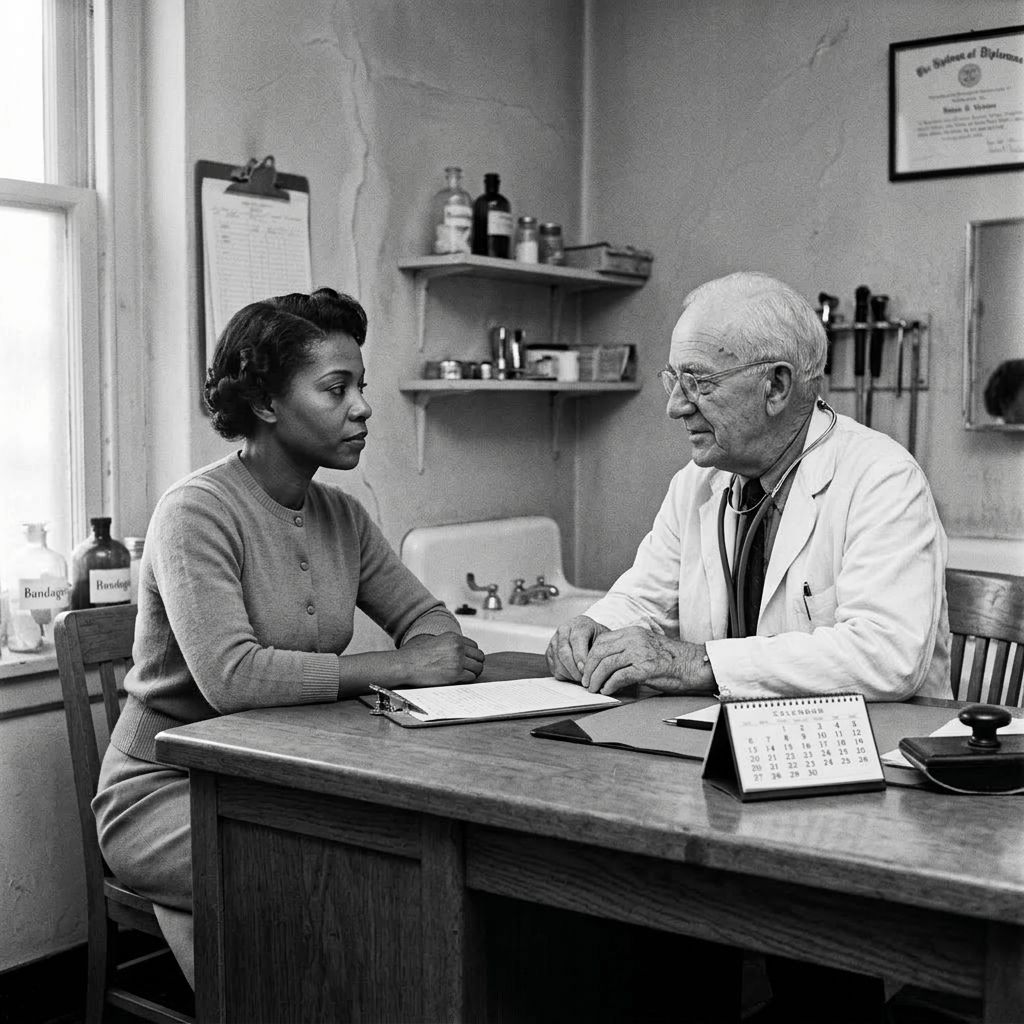
When I first became a GP, consultations felt very different.
Patients booked an appointment with their doctor. They arrived, sat down and we talked.
Often they came with a list.
Sometimes it was a very long list.
There might be a sore knee, poor sleep, concerns about an elderly parent, a changing mole, a prescription query and a question about a child’s behaviour all in the same consultation.
As doctors, we would usually listen to everything first and then decide what was connected, what needed investigating and what could safely wait.
It wasn’t a perfect system.
But it was a personal one.
For many years I worked in a single-handed practice. Every request for an appointment came through me. I knew my patients, their families, their medical histories and often what was happening in their lives long before they entered the consulting room.
That knowledge mattered.
If somebody attended with anxiety, I already knew whether this was completely out of character or something we had discussed before.
If an elderly patient was struggling, I knew who lived nearby and who might be able to help.
If somebody came with a list of concerns, I could often see how the pieces fitted together before they had even finished speaking.
Sometimes I would arrange a longer appointment. Sometimes I would ask somebody to come at the end of surgery so neither of us felt rushed. Sometimes I would visit them at home.
Continuity did not make medicine easier, but it often made it better.
It allowed relationships to develop and trust to grow over time.
Over the years, however, general practice has changed enormously.
Demand has increased. The population is older. People are living longer with multiple medical conditions. General practice is managing more complex care than ever before.
At the same time, resources have become increasingly stretched.
Today many practices use online forms, telephone triage and systems designed to direct patients to the most appropriate clinician. Patients may be offered appointments with pharmacists, physiotherapists, nurses, mental health practitioners and many other skilled healthcare professionals.
These changes have brought benefits.
But they have also changed the experience of seeing a GP.
Appointments are often ten minutes long. Continuity can be difficult to achieve. Many practices operate what is effectively a one-problem-per-appointment approach because there simply is not enough time to do everything.
Patients are not the only ones who sometimes find this frustrating.
Doctors do too.
Many patients miss seeing the same doctor each time, but continuity benefits doctors as well. It is much easier to care for somebody when you know their history, their family circumstances, their personality and how they usually respond when life becomes difficult.
Increasingly, doctors find themselves consulting with people they have never met before.
The appointment may be ten minutes long. The list of medical problems may fill several pages of notes. Important information may be buried within years of records.
Before the patient has even sat down, the doctor may already be trying to review previous consultations, blood results, hospital letters and medication lists.
Once the consultation begins, they are simultaneously listening, assessing risk, documenting the consultation, arranging investigations, generating prescriptions, completing referral letters and deciding what should happen next.
Most surgeries run back-to-back with very little time between appointments. The administrative work often continues long after the last patient has left.
This is not a criticism of individual practices or clinicians.
It is simply the reality of a system under increasing pressure.
If I am honest, I often found working in a large practice surprisingly difficult.
After spending so many years knowing my patients so well, I felt oddly vulnerable making important decisions about people I had never met before.
I realised how much I relied upon the thing that never appears in a medical record: the relationship.
One of the highlights of my day was often seeing somebody I recognised from my single-handed practice days. The consultation immediately felt different. There was familiarity, trust and continuity. We were not starting from scratch.
I realised how much I valued that.
Perhaps that is one of the reasons I enjoy what I do now.
Having the time to listen.
Having the time to explore concerns properly.
Having the time to understand not only the symptom but the person experiencing it.
And perhaps most importantly, leaving at the end of a consultation feeling that I have done the best job I can, rather than wondering what more I might have uncovered if there had simply been a little more time.
The direction of travel within healthcare is increasingly towards larger systems, more sophisticated triage processes and greater use of technology.
Some of these developments are undoubtedly positive. Better triage can help ensure patients reach the right clinician more quickly. Artificial intelligence will almost certainly improve many aspects of healthcare in the years ahead.
But there is a risk too.
The more efficient a system becomes, the easier it is for people to feel as though they are being processed rather than cared for.
Healthcare is rarely just about symptoms.
One patient’s skin lesion is not necessarily the same as another’s.
A photograph of a mole may look identical on a computer screen, but the context may be completely different. One person may simply want reassurance. Another may have just watched their partner go through treatment for melanoma and be carrying weeks of anxiety and fear.
The technology sees the lesion.
The conversation reveals the person.
That is the part of medicine I hope we never lose.
One of the biggest changes I have witnessed during my career is the increasing complexity of the problems people bring to general practice.
Many appointments now involve anxiety, low mood, loneliness, caring responsibilities, relationship difficulties, work pressures, financial worries, housing concerns, ADHD assessments and social isolation.
Often there is no prescription that can solve these problems.
Sometimes what people need most is somebody to listen, help them make sense of what is happening and guide them towards the right support.
Modern general practice has become as much about navigating mental health services, social care, community support and voluntary organisations as it is about diagnosing disease.
The consultation is often the beginning of a journey rather than the end of one.
Following the Covid pandemic, I also noticed more people becoming concerned about their appearance, their skin and aspects of themselves they had never previously noticed.
Perhaps it was spending so much time looking at ourselves on screens. Perhaps it was social media and increasingly filtered versions of reality.
Whatever the reason, people seemed to emerge from the pandemic looking at themselves differently.
So what does all of this mean for patients?
It means that most GPs are doing their very best within a system that often feels stretched for both doctors and patients.
It means that consultations need to achieve more than they once did.
When I was running my own practice, I often knew the patient before they sat down. I knew their history, their family circumstances and the wider context of their lives. The consultation could start where we left off last time.
Today, that is often not the case.
Many consultations begin with both doctor and patient trying to understand each other from scratch.
The reality is that neither patients nor doctors created this system, but both have to work within it.
It is also worth remembering that doctors cannot always solve problems immediately.
Many conditions require time. Some diagnoses only become clear as symptoms evolve. Mental health concerns, ADHD assessments and complex medical problems often need more than one conversation.
Even when a GP knows exactly what needs to happen next, the process is not always within their control.
Waiting times for scans, specialist appointments, community services and mental health assessments are often determined by wider NHS pressures rather than the individual doctor.
This can be frustrating for patients.
It can be frustrating for doctors too.
Receptionists are sometimes told, “It will only take the doctor five minutes.” In reality, many problems are more complex than they first appear. What starts as a straightforward consultation can quickly become something requiring careful discussion, examination, safety-netting, referrals or follow-up.
Most doctors want to give patients the time they need. The challenge is balancing that with a waiting room full of people who also need help.
The current system is unlikely to disappear any time soon. The wider shift towards larger practices, centralised services and so-called “super surgeries” is probably a discussion for another day.
Whether we like it or not, this is the system many of us now work within.
Understanding that reality does not remove the frustrations on either side, but it can sometimes help patients and doctors work together a little more effectively.
And whilst we cannot always control how long an appointment lasts, there are things that can help make the most of the time available.
Making the Most of Your GP Appointment
1. Help Your Doctor Understand the Bigger Picture
Symptoms rarely exist in isolation.
Tell your doctor what has been happening in your life, what has changed and what concerns you most.
The symptom is important.
The context is often just as, if not more, important.
2. Mention All Your Concerns Early
Many patients save the issue that is worrying them most until the final moments of the consultation.
Most GPs recognise what is sometimes called the “door handle consultation.”
The plan has been agreed. The appointment is ending.
Then comes:
“Actually doctor, before I go…”
What follows is often the real reason they booked the appointment.
Sometimes it is chest pain.
Sometimes it is anxiety.
Sometimes it is a breast lump or a symptom they have been worrying about for months.
I always tried to ask patients whether there was anything else they wanted to discuss before we finished. Over the years I learned that many people use the first part of the consultation to decide whether they feel comfortable enough to talk about what is really concerning them.
Trust takes time.
People need to feel heard before they feel safe enough to be vulnerable.
Whenever possible, try to mention your main concerns early in the consultation.
3. Write Things Down
Symptoms have a habit of disappearing from memory the moment we sit down in the consulting room.
A few notes on your phone or a piece of paper can be invaluable.
This is particularly helpful for people attending with anxiety, ADHD concerns, multiple symptoms or problems that have been present for some time.
4. Tell Your Doctor What Worries You
Sometimes somebody will spend ten minutes discussing symptoms before finally saying:
“What I’m really worried about is that it might be cancer.”
Or:
“I’m worried I have ADHD.”
Or simply:
“I’m struggling to cope.”
Knowing what is worrying you helps your doctor address those concerns directly.
5. Young People Can Speak to a GP Alone
Many teenagers are surprised to learn that they can see a GP without a parent being present.
If you would prefer to speak privately, you can.
As a GP, I often encouraged young people to write down their concerns beforehand. Some would even hand me a note if they found talking difficult.
There is no right or wrong way to start the conversation.
6. Understand That Mental Health Assessments Take Time
This is particularly relevant when it comes to anxiety, low mood, burnout and ADHD concerns.
Many people expect an immediate diagnosis or prescription.
Sometimes that happens.
Often it doesn’t.
That does not mean concerns are being dismissed.
Good medicine often involves taking a step back and understanding the wider picture.
Sleep, relationships, family circumstances, work pressures, physical health and life events all influence how we think, feel and function.
Sometimes the consultation is the beginning of a journey rather than the end of one.
7. Ask Questions
Never be afraid to ask:
- What do you think is happening?
- What happens next?
- When should I come back?
- What should I look out for?
- Is there anything I can do myself?
You should leave understanding the plan.
8. Remember That Healthcare Is a Partnership
The best consultations happen when doctors and patients work together.
Your doctor brings medical knowledge, training and experience.
You bring knowledge of your body, your symptoms and your life.
Neither is complete without the other.
Medicine has changed enormously since I first qualified.
Some changes have undoubtedly improved patient care. Others have made it harder to preserve the continuity and relationships that many patients and doctors still value.
But one thing has not changed.
The best medicine still begins with a conversation.
The suggestions above are aimed at patients because that is the side of the consultation most people see.
Doctors have plenty to learn as well.
In fact, the list of things that doctors could do better might be long enough for a separate article entirely.
Perhaps that is a discussion for another day.
And if there is one thing I learned during more than twenty-five years in general practice, it is this:
The question you were not going to ask is often the one that matters most.
I hope these suggestions help you feel a little more confident the next time you need to see a GP.
You can find more practical health articles elsewhere on the blog, covering prevention, wellbeing and some of the everyday health questions that don’t always fit neatly into a ten-minute appointment.
Thank you for reading.

