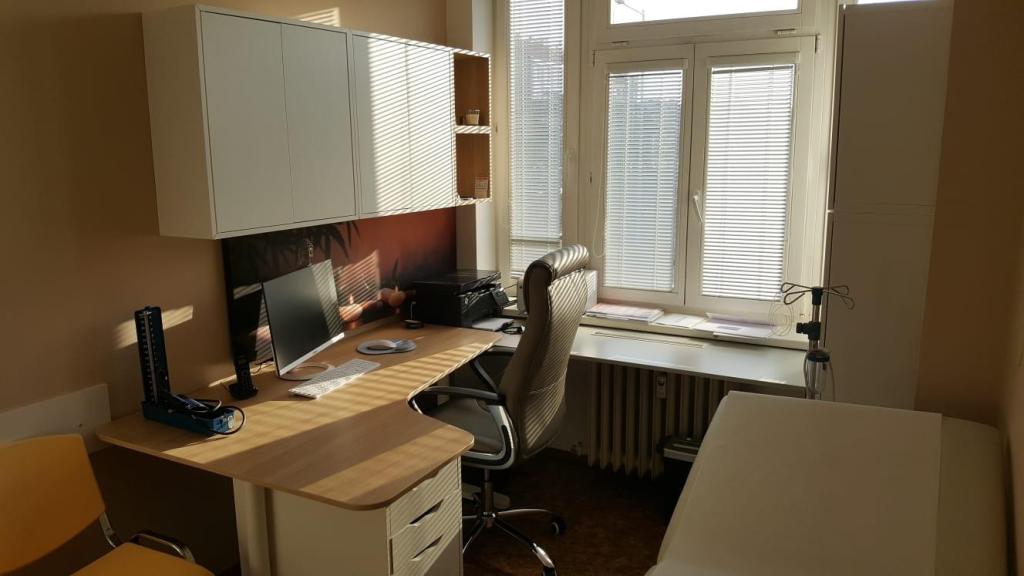
This week I did something I hadn’t done for almost a year.
I went back into the NHS to do two locum sessions.
It was also the first time in more than fourteen years that I had consulted in a practice where I wasn’t the owner or a partner, with at least some degree of control over how my day ran.
I’ll admit, I was nervous.
Would I still be able to do it? Would I remember different computer systems? Would I keep up with the pace after spending the last year building Trinity Medical GP Clinic and, before that, taking time away from work to recover from one of the hardest periods of my life?
As it turned out, I needn’t have worried.
I could still do the job.
But it came as a shock to the system.
Perhaps what struck me most was how different it feels when every patient is a stranger.
For most of my career, I usually knew something about the person before they even walked into my consulting room. I knew their family, their background, what had happened to them over the years or simply how they coped with life. All of that quietly shaped the consultation before a word had even been spoken.
This time I knew almost nothing.
I arrived early each morning so I could read through the notes of the patients I was about to see. It gave me a little context, but only a snapshot. By the time they sat down in front of me, I was still meeting most of them for the very first time.
On my first session I arrived almost an hour early, only to discover I couldn’t get into the consulting room until ten minutes before I was due to start. It was a reminder that, as a locum, you fit into someone else’s system.
Then the clinic began.
Twenty-one patients in four hours.
On paper there were three administrative slots, but realistically there wasn’t much opportunity to catch up. There was no protected time at the end of the session and no flexibility if one consultation needed longer than another.
One patient came in in the middle of what I can only describe as an emotional meltdown. The next had an insect bite.
Both appointments were exactly the same length.
Illness doesn’t arrive in standard-sized packages.
Some problems can be dealt with quickly. Others need time simply to allow someone to tell their story before you’ve even begun to think about diagnosis or treatment.
As the morning went on, I found myself understanding something I hadn’t fully appreciated before.
Patients often become frustrated when they’re asked to book another appointment for a second problem. I completely understand why. When you’re worried, it can feel as though the doctor doesn’t want to help.
But sitting in the locum chair, I could also see the other side.
A locum is paid for a fixed number of hours and is often booked to capacity because practices understandably need value from an expensive resource. If every consultation overruns, there isn’t another hour waiting at the end of the clinic. Those extra minutes have to come from somewhere, and more often than not they come from the doctor’s own time.
I didn’t adopt a one-problem-per-appointment approach, but I completely understood why some doctors do. It isn’t because they care less. It’s because they’re trying to work safely within the time they’re given.
What those two sessions also reminded me was just how much difference it makes when you know your patients.
For most of my career I wasn’t simply looking at a list of names. I knew the stories behind them.
If I knew someone had been struggling with anxiety for months, or that life had become particularly difficult, I also knew that ten minutes was never going to be enough. I’d quietly move them to the end of surgery and give them half an hour instead. Equally, there were patients I knew well enough to say, “Let’s deal with the important thing today and I’ll see you again tomorrow.”
That wasn’t because I had a better appointment system.
It was because I knew the people sitting in front of me.
Continuity changes the way you practise medicine. You aren’t starting from the beginning every time. You already know the family dynamics, the previous conversations, the illnesses that never quite made it into the notes and the worries that sit just beneath the surface.
That kind of knowledge is built over years.
It can’t be handed over in a set of medical records.
When I needed locum cover in my own practice, I always tried to remember what it felt like to be on the other side.
I deliberately gave many of my locums fifteen-minute appointments and built administrative time into their sessions. I wanted the patients they saw to be dealt with properly, rather than simply being told to come back and see me.
Locums are expensive, but I wanted them to add value, so I tried to treat them well.
I was fortunate. I found a small number of excellent doctors who practised medicine in much the same way I did. They listened, they thought and, wherever possible, they solved the problem there and then because they had time to do it. As a single handed GP this was invaluable.
The sessions I worked last week were very different.
I was mainly seeing acute presentations, helping to provide capacity for an already overstretched service. I wasn’t there to provide continuity. I was there to make sure people could be seen.
That isn’t a criticism.
It’s simply the reality of where general practice often finds itself today.
What fascinated me, though, was how quickly I found myself adapting.
By the second session I noticed I was consulting differently.
Not deliberately.
Almost without realising it.
I was more conscious of the clock. I caught myself wondering how many patients were still waiting outside. I could feel the pressure building every time one consultation overran into the next.
I ran to time in the most part, I was more strict of what I could deal with and what I couldn’t and I managed to have a drink and go to the loo unlike the first session.
Yet the inevitable door-handle consultation still happened. Just as one patient was leaving, another important concern emerged—something that simply couldn’t wait until another day.
It made me realise something I hadn’t expected.
The way we practise medicine isn’t determined solely by our knowledge or experience. It is shaped, day after day, by the environment we work in.
Several patients told me they were tired of seeing a different doctor every time they came to the surgery.
More than one said, “It’s nice to actually talk to someone.”
Others thanked me for taking my time.
I smiled, although inside I felt rather sad, because continuity has always been one of the greatest strengths of general practice. It allows you to know far more than what’s written in the notes. It allows trust to develop over time, and that changes every consultation. It allows you to know far more than what’s written in the notes. You already know the family dynamics, the illnesses that never quite made it into the records and the worries that sit just beneath the surface. You aren’t starting from the beginning every time.
One other thing struck me too.
Many practices now rely heavily on locum doctors. Some have regular locums who become familiar faces, while others understandably use whoever is available to help keep the service running.
Before each session I’d already been sent my log-in details, so technically I had everything I needed. When I arrived, I was simply told which consulting room I would be using, opened my computer and got on with the job.
The staff were lovely whenever I needed help.
But everyone was busy. There wasn’t really time to get to know anyone. As a locum, you arrive, do your clinic and then you leave again.
It can feel surprisingly isolating.
As I made my way home afterwards, I realised I could understand why some doctors inevitably become a little detached from the practices they work in. Every day may be in a different building, with a different computer system, different patients, a different consulting room and a different team. Just as you’re beginning to find your feet, it’s time to move on again.
You’re there to do your job well.
Then you disappear.
That isn’t a criticism of practices or of locums.
It’s simply the nature of the role.
More than anything, those two sessions left me with enormous respect for doctors who do this week after week. Many are highly experienced clinicians, yet with fewer salaried posts and partnership opportunities than there once were, locum work has become the only realistic option for many. They adapt, they keep services running and they care for patients, often in circumstances that are far from easy.
By the end of the sessions, I was genuinely shattered. My brain felt frazzled.
It wasn’t simply the number of patients I had seen. It was the constant switching between problems, the mental effort of making safe decisions about people I’d never met before and the relentless awareness of the clock.
It reminded me just how mentally demanding this type of work in general practice really is. You don’t simply see twenty-one patients. You make hundreds of decisions in the space of a few hours for people you don’t know and may never see again.
The truth is, I didn’t particularly enjoy those two sessions.
I got through them.
I stayed behind until nearly half past seven the first time to finish the work properly and then logged on again from home to make sure every patient I had seen had been safely dealt with before finally switching off.
I’ll do the sessions I’ve already committed to because, like many people starting a new business, the additional income is useful while Trinity continues to grow. But I can’t honestly say I’m looking forward to them.
Then Friday arrived. I spent the whole day at Trinity. It was busy, but it was a different kind of busy. I saw patients, took 40 minutes per appointment, took blood, carried out ear microsuction, dealt with paperwork, cleared the decks for Monday and drove home feeling energised rather than drained.
That contrast wasn’t lost on me.
After the day ended, I walked our dog and though about the last night I ever did an on-call shift. Driving home the following morning, I remember thinking,
“Whatever happens from this point on, I will never do another one. Not for all the money in the world”
And I meant it. It was simply the feeling that one chapter of my life had come to its natural end.
Leaving NHS general practice as my career has felt remarkably similar. Yes, I’m doing a few locum sessions. But they’re my choice. If I don’t want to book another one, I simply won’t. The extra income is welcome while Trinity grows, but that’s all it is.
For perhaps the first time in my professional life, I’m working because I want to, not because I have to.
That feels like an extraordinary privilege.
Those two sessions reminded me that I can still do the job.
But perhaps more importantly, they reminded me why I chose a different path.
I have enormous respect for colleagues who continue to work in the NHS—as partners, salaried doctors and locums. Every day they care for patients under immense pressure, often with far less time and flexibility than they would choose.
As for me, I’ve realised something.
Sometimes you have to go back, not because you want your old life again, but because it helps you appreciate the life you’ve built.
Sometimes you need to revisit an old chapter to realise you’ve already turned the page.
After more than thirty years in medicine, I know I haven’t stopped being an NHS GP.
I’ve simply become a different kind of GP.
And for the first time in my career, I’m practising medicine in a way that feels completely true to me.
After everything medicine has given me, that feels like a very good place to be.
Thank you for reading. If this reflection resonated with you, you might enjoy some of my other posts on Notes from a GP. They explore the lessons medicine has taught me over the past three decades—about health, ageing, prevention and life itself. I hope you’ll stay and explore a little further.

