When I took time away from work after losing my parents, I found myself with something I hadn’t had for years.
Time.
At first, it felt deeply uncomfortable.
For most of my adult life I had been busy. I was a doctor, a business owner, a wife, a mother and a carer. My days were measured by what I achieved and how many things I could fit into them. Like many people, I wore busyness almost as a badge of honour. Being busy felt productive. It felt worthwhile. It felt important.
Then suddenly, all of that stopped.
I remember having a conversation with my son before Mum died about what people did with their time if they didn’t work or have a life full of responsibilities. He laughed and said, “Mama, people just fill their days with whatever they have to do. They go shopping, go to the gym, cook dinner and before they know it the day has gone.”
I remember thinking there was no way that could ever be me.
Then it became me.
For the first time in years, I had nowhere to be and nothing particularly urgent to do. I walked the dog without checking my watch. I cooked because I wanted to rather than because I needed to. I sat in the garden. I read books. I did puzzles.
And slowly I began to understand something that many cultures have known for centuries.
The Italians have a phrase, la dolce far niente, which translates roughly as “the sweetness of doing nothing”. The Dutch call it Niksen. Different cultures have embraced the idea that there is value in simply being rather than constantly striving, producing or achieving. In our modern world that can feel almost revolutionary.
We are encouraged to optimise everything. To be productive. To multitask. To use every spare moment wisely. Even our hobbies are often expected to have a purpose. Exercise improves fitness. Reading develops knowledge. Social media helps us stay connected. Everything seems to need an outcome.
Doing something simply because we enjoy it can feel strangely uncomfortable.
I know it did for me.
The urge to be productive was deeply ingrained. Even walking the dog without listening to a podcast or making a phone call felt wasteful at first. Surely I should be multitasking. Surely I should be making better use of the time. But the more I resisted that urge, the more I realised how restorative it was.
I started walking simply for the pleasure of walking. Not to reach a destination. Not to achieve a step count. Just to enjoy the sunshine, the wind or the changing seasons. I found myself sitting quietly with a cup of coffee, watching the world go by. I pottered around the house with no particular purpose. I sat with a puzzle for hours without caring how quickly it was finished.
And something unexpected happened. My mind became quieter. The constant noise that I had lived with for years began to settle.
Science tells us that chronic stress keeps our bodies flooded with cortisol and other stress hormones. Stopping the noise allows those systems to reset. Our brains are not designed to operate at full speed indefinitely and yet many of us expect exactly that from ourselves.
The truth is that doing nothing is not a luxury.
It is a biological necessity. It allows the brain to rewire by activating the Default Mode Network (DMN). When you stop focusing on tasks, this brain circuit engages to process emotions, consolidate memories and foster creativity. It gives overworked areas a rest while building new connections.
I was having brunch this morning with my dear friend Michelle, who is a counsellor, and we found ourselves talking about the art of doing nothing. She often uses a simple analogy when explaining the concept to clients, and I thought it was brilliant.
Imagine your mobile phone. Most of us wait until the battery is almost empty before plugging it in. By that point it is running on fumes. It takes longer to recover and isn’t functioning at its best.
Now imagine if we treated ourselves the same way. What if instead of waiting until we were exhausted, overwhelmed or burnt out, we recharged little and often? What if we gave ourselves small periods of recovery before we reached empty?
We instinctively understand that a phone charges more efficiently when unnecessary apps are closed. The background processes stop draining the battery and the device can focus on restoring itself.
Our brains are not so different.
When we are constantly multitasking, worrying, planning, scrolling, consuming information and reacting to the world around us, it is as though dozens of background apps are running all at once. They consume energy even when we are not fully aware of them. Doing nothing is like plugging ourselves into a charger and closing down those background apps.
For a short while, there is nowhere to be, nothing to achieve and nothing to solve. The mind is simply allowed to recharge.
And just as a fully charged phone functions better, a rested brain thinks more clearly, remembers more effectively, solves problems more creatively and copes with stress more easily.
Perhaps the mistake many of us make is waiting until we are running on 1% before we give ourselves permission to recharge.
Looking back now, I realise I was burnt out.
At the time I didn’t fully understand what that meant. If I’m honest, I was probably quite judgemental about burnout. Like many people, I saw it as a weakness or a label rather than something real.
Then I found myself there.
I couldn’t think clearly. I couldn’t make decisions. The thought of carrying on as I had been felt impossible. What finally helped me recover wasn’t pushing harder. It was letting go and giving myself permission to stop striving for a while and simply be.
That doesn’t mean lying on a sofa all day or abandoning responsibility. Nor is it the same as laziness.
Laziness is often avoiding something we know needs to be done. Doing nothing, in the way I am describing it, is a conscious choice to step away from striving, producing and achieving for a while. It is restorative rather than avoidant.
It is also different from meditation or manifestation, both of which involve a degree of focus or intention. Meditation asks us to focus on the breath, a thought or a feeling, so the mind is still actively engaged in a process. Manifestation asks us to visualise a future, create an outcome or direct our energy towards something we hope to achieve.
Both are active practices.
Doing nothing is simpler than that. It requires no goal, no intention and no desired outcome. In fact, the whole point is to remove the outcome altogether: to be comfortable, to let go of expectations and to stop trying to achieve a particular state of mind.
Thoughts may come. Worries may surface. Feelings and physical sensations may appear. The temptation is to analyse them, fix them, push them away or make sense of them.
The art of doing nothing asks us to do none of those things.
Just let them be.
Observe without intervening.
Allow whatever comes up to come up and whatever passes to pass. No analysing. No problem solving. No trying to improve yourself. No striving for calm, clarity or enlightenment. Simply allowing the brain the space to declutter itself naturally, without distraction and without interference.
It is about being present in whatever you happen to be doing, whether that is walking, sitting on a bench, watching the clouds drift by or simply enjoying a cup of coffee.
It is the art of effortless being.
Doing nothing for the sake of doing nothing.
That may sound deceptively simple, but for many of us it takes practice. We have become so conditioned to filling every moment that emptiness can feel uncomfortable. Yet there is something incredibly liberating about removing the goal altogether.
The irony is that the more permission I gave myself to do nothing, the more productive I became when I did choose to do something. Ideas came more easily. Decisions felt clearer. Problems that had seemed overwhelming suddenly looked manageable.
Creativity returned. Energy returned. Joy returned. But that wasn’t the purpose. The purpose was simply to stop. To rest. To allow my mind and body the opportunity to recover.
In a world that constantly tells us to do more, be more and achieve more, there is something quietly rebellious about doing less. And perhaps that is why it is so powerful.
The art of doing nothing isn’t really about doing nothing at all. It is about remembering that our worth is not measured by our productivity. Sometimes the most healing thing we can do is simply allow ourselves to be.
So if there is one practical thing I would encourage you to take away from all of this, it is simply to try it for yourself.
Start with ten minutes. Ten minutes of doing absolutely nothing. No phone. No podcast. No scrolling. No emails. No trying to meditate. No trying to manifest. No trying to achieve a state of calm. Just ten minutes of being.
You may be surprised by how long ten minutes feels when there are no distractions and nothing demanding your attention. You may find yourself feeling restless. You may even feel guilty because there are a hundred other things you think you should be doing.
I still feel that way sometimes.
Even now, I occasionally catch myself thinking that I should be using the time more productively, that I should be doing something useful. Old habits are hard to break.
But it does become easier.
And with practice comes something else: a sense of calm. Not because you have achieved it, but because you have stopped chasing it.
If you need to give it a label to justify the time, call it rest. Call it recovery. Call it self-care. Call it whatever makes you feel comfortable.
But try it.
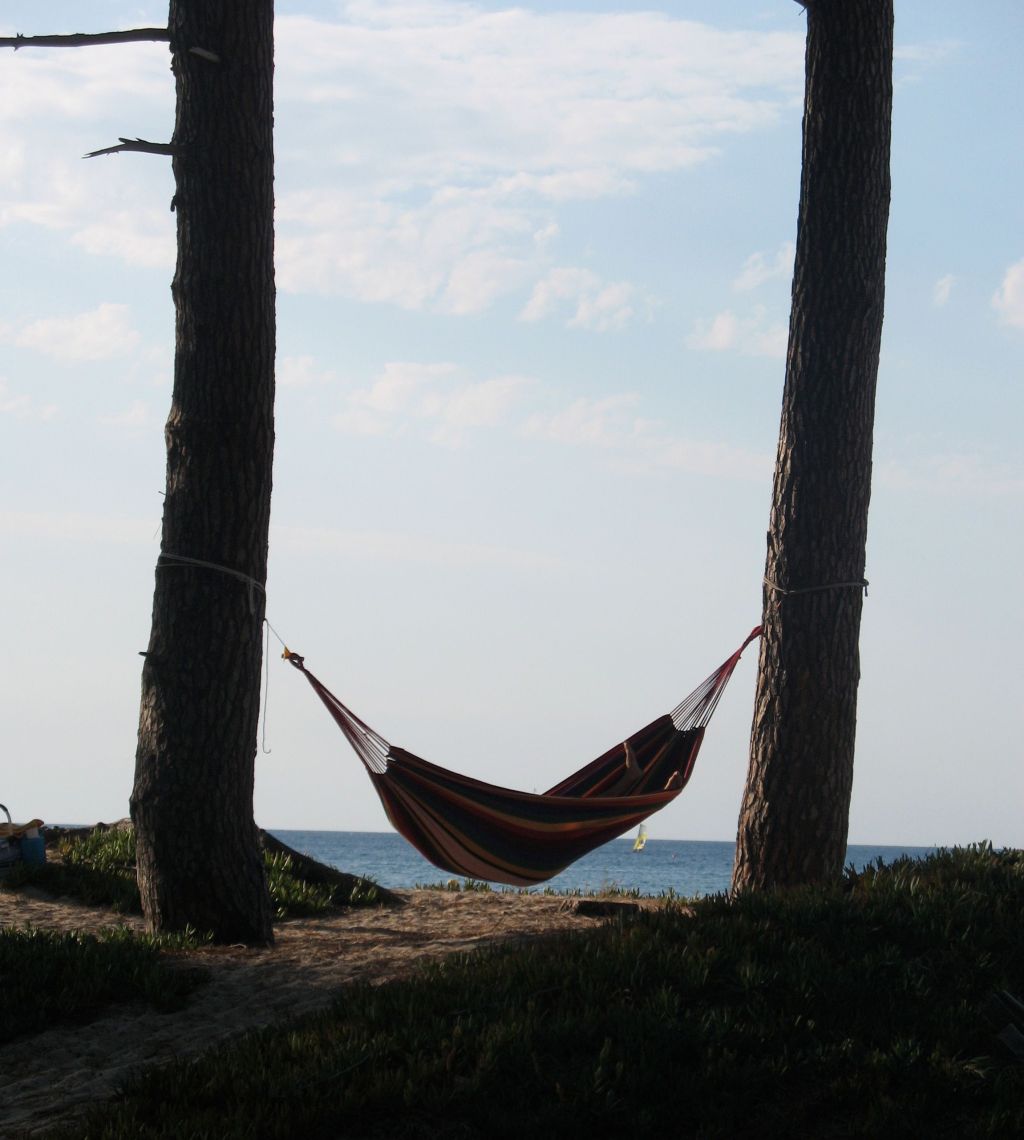
Sit on a bench and watch the world go by. Take a walk without a destination. Drink a cup of coffee without looking at your phone. Lie in a hammock and listen to the wind in the trees.
Do nothing for the sake of doing nothing.
You might discover, as I did, that sometimes the most productive thing we can do is absolutely nothing at all.
So the next time someone asks you what you’re doing, perhaps you can look forward to saying:
“I’m doing nothing. Nothing at all.”
And for once, that might be exactly what you need.
Thank you for reading.
You can find more reflections on medicine, health and life in the Posts section.

