Tag: writing

  • How to create a life of Intentional Happiness

    How to create a life of Intentional Happiness

    After losing my parents there was a period of time when I felt overwhelmingly sad. Not sad every minute of every day perhaps, but empty. The life I had known for years had changed completely and there was a huge hole where my parents had been. I missed them both terribly and although I knew I was healing, I couldn’t honestly say I felt happy.

    It got me thinking about happiness itself. What actually makes people happy? And perhaps more importantly, how do we find happiness again when life has dealt us a blow that feels impossible to recover from? As I started reading around the subject, I came across the concept of the happiness pie chart. The exact percentages vary depending on which study you read and some researchers question them altogether, but the overall message fascinated me. The theory suggests that around half of our happiness is influenced by our genetics, something we have little control over. Only a surprisingly small amount appears to be linked to our external circumstances such as wealth, status, possessions or where we live.

    The rest comes from us. From our habits, our choices, our mindset and the way we choose to live our lives. That idea stayed with me. If happiness wasn’t determined primarily by what happened to us, perhaps there was something I could do to help myself heal. Perhaps happiness wasn’t something we simply found. Perhaps it was something we could create. And so began my road back.

    The first thing I did was rest. Properly rest. For the first time in ages there was nowhere I needed to be and nobody needed anything from me. For years I had measured my days by what I achieved. Suddenly I found myself sitting with a book for an hour, spending an afternoon doing a puzzle or taking a long walk with the dog and my phone switched off. At first it felt uncomfortable. Then it felt liberating. I stopped feeling guilty for doing very little and started appreciating the space that doing very little created. Looking back now, I think many of us have forgotten how to rest. We fill every moment with activity, noise or distraction and then wonder why we feel exhausted.

    What surprised me was that once I stopped rushing, I started noticing things again. Not big things necessarily, but the small things that had always been there and which I had somehow stopped seeing. The warmth of sunshine through the window, a conversation with one of my children, a walk with the dog or a cup of tea with a friend all seemed more significant than they had before. 

    At the same time I found I had something else I hadn’t had for a while: time. Time to think, time to read and time to be curious

    I became fascinated by understanding why some people seemed happier than others and whether happiness was something that could actually be learned. So I studied. I have always been interested in non-Western philosophy and ideas around mindfulness, spirituality and the way our thoughts influence our lives. What changed during this period wasn’t the interest itself but the amount of time I had to explore it.

    For the first time in years I wasn’t rushing on to the next thing. I had the time to read more deeply, to listen, to reflect and to question things I had previously accepted without much thought. I read books, listened to podcasts, watched videos and disappeared down more rabbit holes than I care to admit. The more I learned, the more curious I became and before long I found myself spending hours exploring ideas I had only previously touched on. I was searching for answers and I was open to finding them.

    One of the things that resonated with me was the idea that where we place our attention matters. If we spend our lives focusing on what is missing, we notice more absence. If we focus on what is good, however small, we begin to notice more of that too. That idea led me to a daily practice.

    Every morning before I did anything else, I listened to a manifestation recording on YouTube. The focus was on raising your vibrational energy and being consciously grateful, bringing a positive emotional state of being into the day. I would consciously thank the universe for another day, for my existence, for my family, for my breath, for the trees, for all the small things that I took for granted. I would focus on what was present in my life rather than what was absent. It wasn’t something I did occasionally. I did it every day. Gradually it became part of who I was. The more I practised, the more positive I felt. The more positive I felt, the more hopeful I became. And the more hopeful I became, the easier it was to imagine a future that looked different from the life I had lost.

    Manifestation became less about wishing for things and more about clarity. I became fascinated by the concept of identity shifting. Put simply, it is the idea of becoming clear about who your future self is and then making choices that move you in that direction.

    I started asking myself what came next. Who did I want to become now? What did I want my life to look like? How did I want my days to feel? What sort of work did I want to do? Who did I want to spend my time with? The more I sat with those questions, the clearer the answers became. And once they became clear, opportunities started appearing that I might not even have noticed before. Perhaps they had always been there. Perhaps I was simply ready to see them Either way, one thing led to another.

    Today I have a private GP clinic opposite the road where my old surgery once stood. I work with my son, my daughters help out too and most days work doesn’t feel like work.

    Whether you call that manifestation, mindset or simply being clear about where you want to go in life doesn’t really matter. What matters is that it changed the direction of mine.

    I became much more selective about relationships. That sounds harsh when I write it down but the last few years have taught me that time is precious. One of my daughters said something to me after Dad died that has stayed with me ever since.

    “Mama, not everyone who comes into your life is meant to stay there forever. Even family.”

    At the time I was sad about a relationship with a family member who had once been very important to me. Life had happened, we had drifted apart and there was no obvious way back.

    We spend so much of our lives holding onto relationships because of history, obligation or guilt. Sometimes people grow in different directions. Sometimes relationships simply belong to a particular chapter of our lives. That doesn’t mean they weren’t important. It simply means that chapter has ended and it’s ok to let go of them. My daughter gave me the simple explanation for something I had been mulling over for so long and told me it was ok to let it go. And I instantly felt lighter. 

    These days I spend my time with people I genuinely enjoy being with. People who make me laugh. People who bring energy into my life rather than draining it. I no longer feel guilty about saying no. If I have an empty weekend, that’s perfectly fine too. I like having empty days. I’ve stopped filling space for the sake of it and, ironically, having the space makes me feel happier and more content.

    Perhaps because of that, I have come to appreciate even more the people I choose to spend my time with. Seeing them happy genuinely makes me happy and I think that has always been true of me. Perhaps that is why relationships have always mattered so much and why I have always enjoyed looking after people.

    I love spending time with my family. I love creating memories together. I love celebrating things, however small. I love seeing people succeed, achieve something they have worked hard for or simply enjoy themselves.

    And yes, I love buying gifts. Not expensive gifts necessarily, but thoughtful ones. The sort where you’ve listened to somebody mention something months ago and remembered. The sort that tells somebody they were heard.

    There is something lovely about seeing somebody realise that you’ve paid attention. Perhaps that’s why giving has always brought me so much pleasure. There is something deeply satisfying about making somebody else’s day a little brighter, not because you expect anything back but simply because you can.

    And if you can, why wouldn’t you?

    I suspect that is one of the reasons I became a doctor in the first place. Looking after people, helping them, solving problems and making life a little easier where possible has always given me a sense of purpose. The older I get, the more convinced I am that happiness grows when it is shared.

    Creating memories has always been important to me too. If I’m honest, I’m probably not the world’s greatest saver. I’m sure there are people my age who are much better prepared financially than I am. Some may already be retired. Some may have second homes and investment portfolios that would make a financial adviser very happy. I’ve never really been motivated by those things. Instead I have spent my money on experiences. Family holidays. Days out. Meals together. Theatre trips. Weekends away. Sometimes holidays I probably couldn’t really afford at the time. If there was a choice between buying something sensible and saving, or creating a memory, I almost always chose the memory. When I look back over my life, I don’t regret that for a second.

    The things that make me smile aren’t possessions. They are memories. Family holidays that didn’t quite go to plan and somehow became funnier because they didn’t. Conversations that lasted long into the evening because nobody wanted them to end. Dancing with my children late into the night. Sitting around a table with people I love, laughing so much that nobody can finish a sentence. Or having deep conversations about whatever the topic was that day. When I lost my parents, it wasn’t possessions that brought me comfort afterwards. It was memories. Thousands of them. The conversations. The holidays. The family gatherings. The ordinary afternoons that didn’t seem particularly important at the time but became precious afterwards. Perhaps that’s why I still choose experiences over things whenever I can. The older I get, the more I realise that memories are one of the few things in life that become more valuable with time.

    Looking back now, I don’t think happiness is a given for everyone. For the lucky few, possibly. But I think it is something we can cultivate. Something we can build slowly through our habits, our relationships, our choices and the way we choose to view the world around us.

    One of the biggest things I have learned is that happiness and sadness can sit alongside each other. Losing my parents remains the hardest thing I have ever been through and there are still moments when I miss them terribly. There are still days that feel harder than others and I suspect there always will be.

    I am not suggesting that I feel happy every day. That would be unrealistic. What I have learned, however, is that I can usually bring myself back to that place. Sometimes it takes effort. Sometimes it takes conscious thought. Sometimes it means returning to the very things that helped me heal in the first place; gratitude, connection, purpose, creating memories, helping others and reminding myself of all the good that still exists in my life. And accepting that I may not always feel happy is ok too. We all have bad days and that’s ok.

    For me, happiness wasn’t something I found after losing my parents. It was something I slowly rebuilt after I lost them. And perhaps that is the real lesson. Not that life becomes easier. Not that difficult things stop happening. But that even in the midst of sadness, happiness remains available to us if we are prepared to nurture it.

    So can we learn to be happy?

    Yes. I think we can.

    Thank you for reading.

    You can find more reflections on medicine, health and life in the Posts section.
  • How to live with loss

    How to live with loss

    Did you know that grief can have a profound effect on the body in a very physical way?

    Takotsubo cardiomyopathy, more commonly known as broken heart syndrome, is a condition where intense emotional stress causes a temporary weakening of the heart muscle. I have always found that fascinating because it reminds us that grief isn’t simply an emotion. We talk about heartbreak as though it is a figure of speech, but sometimes loss affects us so profoundly that it leaves physical marks on the body itself.

    Looking back on the last two years of my life, that somehow makes perfect sense to me.

    This isn’t a medical article though. There are plenty of people more qualified than me to explain the science. Instead, this is simply my experience of loss and what helped me navigate it. I don’t pretend to have the answers because grief is different for all of us. What follows isn’t a formula or a prescription. It is simply what helped me.

    By the time I lost my dad, I had already been grieving for a long time.

    In the last few years of his life I watched a strong, independent man become increasingly frail. Seeing your parents age is one of life’s cruellest lessons. No matter how old we become ourselves, part of us still sees them as they always were. To suddenly find yourself helping with personal care and doing things they once did for you is a difficult adjustment for everyone involved.

    Dad accepted it all with remarkable grace.

    I had feared losing him for most of my life. Every health scare, every hospital admission and every unexpected phone call would send my imagination into overdrive. Completely irrational for a doctor perhaps, but as a daughter who adored her father it made perfect sense. The thought of my life without him or Mum was simply too much to bear.

    Dad was never frightened of death. We talked openly about it in the months before he died, and hearing him say he wasn’t scared brought me enormous comfort. He lived until he was ninety-two and died peacefully at home in his own bed, exactly where he wanted to be. A gentleman to the end, he somehow seemed to know when it was time.

    There wasn’t much opportunity for me to stop and reflect afterwards because Mum needed us.

    After sixty-five years together she suddenly found herself alone for the first time in her adult life. I was acutely aware of just how much Dad had quietly done for her over the years and now he wasn’t there to do it anymore. So I did. I wanted to.

    I split my time between work, my own family and Mum’s bungalow and, looking back now, I don’t think I had the time or space to process Dad’s death because Mum needed me more.

    So I carried on.

    Other major life events happened during that period too. My father-in-law died, I was evicted from my practice premises and life seemed determined to keep moving whether I was ready or not.

    For twenty months we carried on like that.

    Then Mum died.

    And life as I had known it simply stopped.

    For years my days had revolved around caring for other people. Work, family, my folks, two homes and the endless practicalities that come with supporting ageing parents had filled every spare moment. Suddenly there was a huge space where all of that had been.

    What was I supposed to do with all the time I had?

    That was the question that kept going round and round in my head.

    Before Mum died I remember having a conversation with my son about people who didn’t work and didn’t seem to have particularly busy lives. He laughed and said, “Mama, people just fill their days with whatever they need to do. They go shopping, go to the gym, cook dinner and before they know it the day has gone.”

    I remember telling him there was absolutely no way that would ever be me.

    As it turned out, he was right.

    For the first time in my career I was signed off work. I didn’t want to make decisions for people. I didn’t want to hear anyone’s problems. I didn’t want to help anyone. After spending so much of my life caring for others, I simply wanted to sleep, rest and get used to a world without my parents in it.

    There was about a month between Mum’s death and the funeral and, if I’m honest, much of that time is a blur. In fact many of the weeks afterwards feel the same.

    I was at home every day. I walked our dog. I cooked proper dinners. I did all the mundane jobs that normally get squeezed into the gaps between everything else and, for the first time in years, I wasn’t rushing from one thing to the next. I had absolutely nothing I needed to do.

    I leant into it.

    Looking back now, that is probably the first thing I would say to anybody going through grief. Allow yourself to stop. Don’t feel guilty for slowing down and don’t let anybody tell you that you should be getting on with things. We live in a world that celebrates being busy, but grief needs space. It needs quiet. It needs room to breathe.

    I suddenly had the luxury of doing one job a day, or none at all, instead of trying to cram ten jobs into a few hours. I could spend an afternoon cooking something from scratch, meet a friend for coffee on a Tuesday morning or walk the dog without constantly looking at my watch.

    At first it felt strange.

    Gradually though, I began to appreciate the simplicity of it. For years my life had been dictated by what everybody else needed from me. Now I was learning to move at a different pace and, although I didn’t realise it at the time, that slowing down was part of the healing process.

    What surprised me was that trying not to think about things didn’t help at all.

    I am not somebody who naturally turns to counselling, although it was suggested by several worried family members who had never known me to do absolutely nothing. Instead, I read. I meditated every day. I reflected deliberately. I allowed myself to cry and to think about the things that hurt rather than pushing them away.

    Looking back now, I think that was one of the most important things I did.

    The more I allowed myself to feel the grief, the less frightened of it I became.

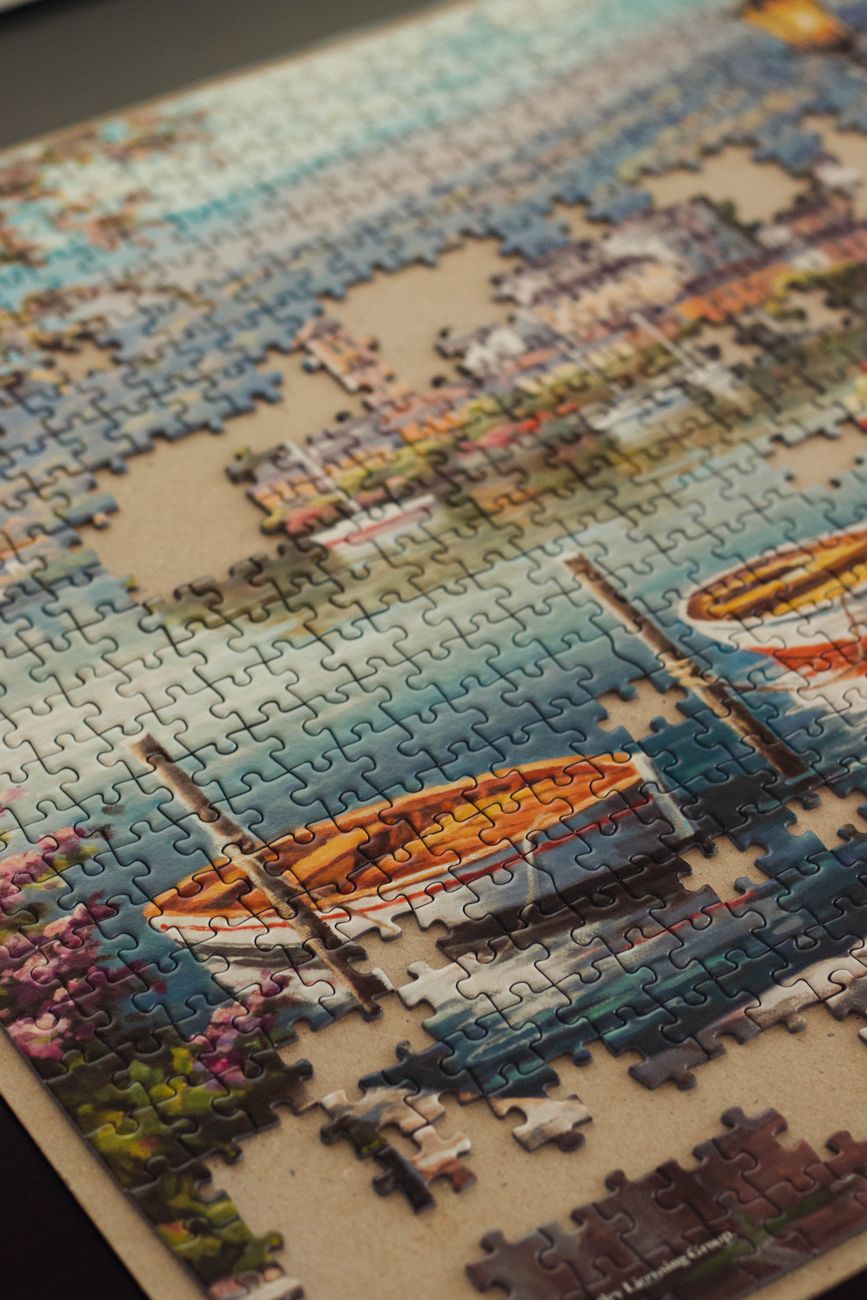
    For me, puzzling became my therapy.

    Every day I would sit at the kitchen table listening to the radio while working on thousand-piece puzzles of seaside towns, cosy libraries and beautiful places I hoped to visit one day. They were places that felt peaceful and hopeful at a time when I desperately needed both.

    Family members came and went, but the puzzle remained.

    Looking back now, I realise those puzzles became a metaphor for my life.

    Some days I couldn’t fit a single piece. Then suddenly pieces I had been staring at for days would slot perfectly into place. Grief felt very similar. There were days when nothing made sense and days when things felt a little clearer. Days when I felt completely lost and days when I could glimpse what life might look like next.

    Slowly, piece by piece, I started putting myself back together.

    I still keep a puzzle on the go now. When life feels noisy or overwhelming, I take it out and spend half an hour fitting pieces together. I’ve even done some of them more than once because I enjoyed them so much.

    Completing the first puzzle only a few weeks after Mum died made me cry. It felt far more emotional than finishing a jigsaw should have done, but it wasn’t really about the puzzle.

    It was about realising that, little by little, I was finding my way forward.

    Around the same time, I also realised how lucky I was to have good people around me.

    I am fortunate to have a handful of very good friends who knew how involved I had been in my parents’ lives and who understood that the hole left behind was enormous.

    When they reached out, I talked.

    Sometimes I cried.

    Sometimes I sat quietly and listened.

    One friend in particular is a counsellor and she helped me understand why I was feeling the way I felt. For somebody who is usually strong and capable, there were times when I felt completely useless and it helped to hear that what I was experiencing was normal.

    Sometimes it was good to talk and sometimes it was good not to.

    Both are okay.

    Perhaps the greatest comfort of all came from something I hadn’t fully appreciated until after Mum died.

    I had no regrets.

    That doesn’t mean I did everything perfectly. Of course I didn’t. But I could honestly say that I had done everything I could. I had spent the time. I had shown up. I had said the things that mattered and done the things that needed doing.

    There was nothing left unsaid.

    That gave me an enormous sense of peace.

    My mum used to say that life was too short for grudges and that you should never go to bed angry because you never know what tomorrow might bring. Looking back now, I realise that lesson shaped the way I lived long before I understood its importance.

    I often wonder whether part of the pain some people experience after loss comes from wishing they had done things differently.

    For me there was sadness, there was longing and there was grief, but there was no guilt.

    That made all the difference.

    I’m not even a year into this journey and I know I still have a long way to go, but I am healing.

    Over the last few months I have found myself trusting the universe a little more than I ever did before. I’ve asked for signs and, somehow, they always seem to come. Not necessarily when I ask for them and not always in the way I expect, but often just when I need reminding that everything is okay.

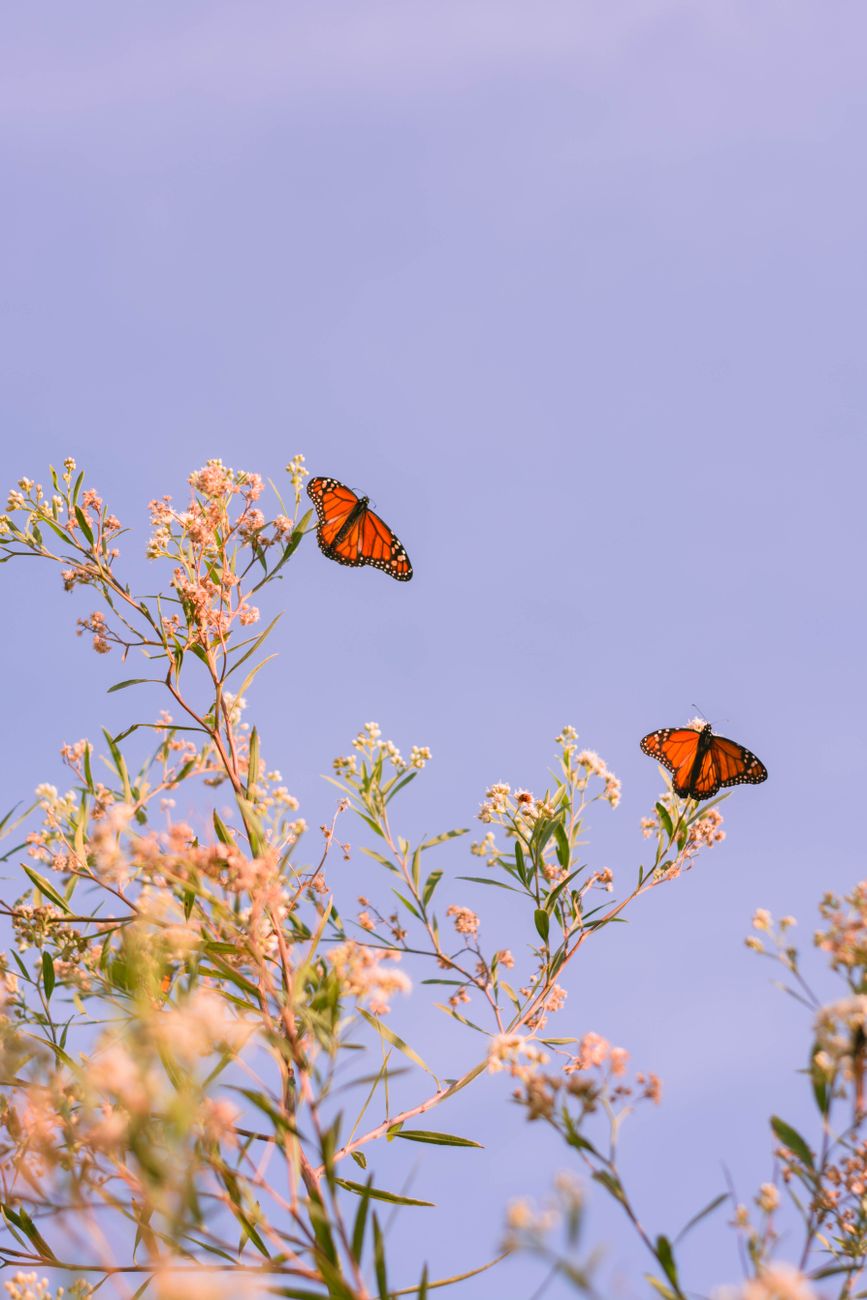
    Butterflies are my sign.

    Whenever I see two butterflies together I smile because, in my head, that’s Dad and Mum checking in on me. Sometimes they are real butterflies that literally stay with me through a walk and sometimes they are pictures, cards or photographs that appear unexpectedly. It doesn’t really matter whether anybody else believes it. For me they are a reminder that love doesn’t disappear just because somebody is no longer physically here.

    Grief doesn’t really end.

    It changes shape.

    There will always be empty chairs at the table and moments when I wish my parents were still here to share something with. But I remind myself that they are here every day and I truly feel that. The sadness hasn’t disappeared, but it has softened. The loss remains, but it no longer consumes every waking moment.

    Perhaps that is the nature of grief.

    We don’t get over it.

    We learn to carry it.

    And perhaps that is the greatest gift my parents left me.

    Not how to deal with grief.

    But how to live with loss.


    Thank you for reading.

    You can find more reflections on medicine, health and life in the Posts section.
  • What matters most

    What matters most

    The opportunity that came along was almost too good to ignore and what happened next changed the course of my career.

    A local GP was approaching retirement and was looking for somebody to join the practice with a view to taking over when he stepped down a year later. His son had originally been expected to take over but had decided instead to move to Australia, leaving the future of the practice uncertain.

    For me, it felt like a remarkable opportunity.

    The surgery was within walking distance of home. The children were older, life looked very different from when I had made the difficult decision to let go of my first practice and, for the first time in years, I could see a way of combining practice ownership with family life.

    It wasn’t a decision I took lightly. Taking over a practice meant increasing my hours considerably and accepting a huge amount of additional responsibility. As a family, though, we talked it through and decided it was an opportunity too good to miss. In many ways, it felt as though life was giving me a second chance.

    My husband, who had been made redundant and had started his own management consultancy, initially agreed to spend a couple of weeks helping me review the business side of the practice. Two weeks became a month, a month became several months and before long he had become an indispensable part of the team. Eventually he gave up the consultancy altogether and became my practice manager.

    Looking back now, I honestly don’t know how I would have done it without him.

    Together we developed the practice and gradually grew the patient list. By the time I eventually left, we were caring for around 4,000 patients with a very small and dedicated team. It was general practice as I had always known it and I loved it.

    The children spent a lot of time at the surgery. We were both working and there were many afternoons when they would arrive after school, appearing in reception, doing homework in spare rooms or helping themselves to biscuits and cakes that patients had baked for us. At times it felt strangely familiar and I would often find myself remembering my own childhood.

    Without consciously planning it, I had recreated something remarkably similar to the world I had grown up in. It wasn’t just a practice. It was part of family life.

    There were a lot of hats to wear. On any given day I might be a GP, a practice owner, a wife, a mum and a daughter to ageing parents. Like most working mothers, I spent years juggling surgeries with school runs, parents’ evenings, sports days, packed lunches and trying to work out what everyone was going to have for dinner.

    It wasn’t always easy. Running a single-handed practice was hard work and the responsibility never really left you. We rarely took proper breaks, the days were often long and there was always another problem waiting to be solved. Yet there was also a freedom that came with it. I planned my own diary, I knew my patients well and, although there were difficult days, there were many more good ones.

    The practice gradually became our second home. More than that, it was ours. We grew it together and, despite all the challenges, there was something deeply satisfying about creating something that reflected our values and the way we believed general practice should be.

    Over the years it became increasingly difficult to find locums willing to provide cover as general practice moved steadily towards larger organisations and group practices. I found a couple of old-school colleagues who were happy to cover sessions, which helped build a little resilience into the system. Being the only doctor on site still meant there was nowhere to hide. If an emergency arrived, you dealt with it. If several problems landed at once, you prioritised and managed them. There was no colleague in the next room to ask for help.

    You learned to stay calm, make decisions and carry responsibility and, with all of that in mind, very little really fazes me these days. I rarely get stressed or panicked about anything. I’ve always told my children that they can tell me absolutely anything and I will never be shocked because, between life and medicine, there is very little I haven’t either experienced myself or heard about from somebody else. And they do.

    What I loved most, though, was always the patients.

    Not once in my career have I stopped feeling privileged when a patient walks into my consulting room and trusts me with their story. It is the first lesson I teach medical students. Never lose sight of what a privilege that is.

    There are very few professions where people sit down in front of a stranger and tell them things they may never have told another soul. Perhaps only priests experience something similar.

    People never cease to amaze me. Over the years I have listened to stories of courage, resilience, humour, heartbreak and despair. Some have been uplifting, some tragic and some so complicated and extraordinary that they could easily have come straight from a television drama. General practice gives you a unique window into people’s lives and sometimes I would leave a consultation thinking that no scriptwriter could possibly have invented a story quite like it.

    So the second lesson I try to teach students is that patients will teach you far more than any textbook ever can if you take the time to listen. Looking back, much of my real learning happened on the job. Not just the social side of medicine, but the practical side too. The clinical decision-making, the examination techniques, developing my own style of consulting and learning how to navigate complex symptoms all evolved over time. I often found myself creating mental maps to help make sense of seemingly unrelated problems and gradually learned that medicine is as much about pattern recognition and curiosity as it is about knowledge. Patients were some of my greatest teachers.

    I realise that what I valued most about those years wasn’t the ownership, the independence or even the flexibility. It was continuity. It was the privilege of knowing people over years and sometimes decades, of understanding not only their medical history but also something of their lives, their families and the things that mattered to them.

    Perhaps that is why I struggle with some of the changes that have taken place in general practice over recent years.

    People often ask why I chose not to continue working in the way modern general practice is evolving. The answer is complicated, but at its heart it comes down to relationships.

    I have never really believed that people can be reduced to a ten-minute appointment or a list of isolated problems because life simply isn’t that neat. One appointment, one problem sounds sensible on paper, but how do we know that problem number two isn’t connected to problem number one? How do we know that the tiredness isn’t linked to the bereavement, the headaches to the anxiety or the stomach pain to the stress of caring for an elderly parent?

    Continuity matters because it allows someone to join the dots. It allows a doctor to know what happened last year, what happened ten years ago and what might be happening beneath the surface today. I worry that something important is lost when nobody holds the whole picture.

    Patients need somebody who knows them, advocates for them and takes responsibility for helping them navigate increasingly complicated systems. Someone who notices when things don’t quite add up.

    At least, that is the sort of doctor I have always tried to be.

    I am a very emotional person. At happy times and sad times, at weddings, family speeches and all sorts of occasions, any member of my family will tell you that I am almost guaranteed to cry. My husband carries a hanky just for me whatever the occasion. The same is true in the consulting room and over the years there have been many occasions when I have sat with a patient and cried alongside them, not because I lacked professionalism, but because sometimes being human is exactly what the moment requires.

    Perhaps that is what I value most about general practice. The privilege of sharing in people’s lives at their best and at their worst.

    That is what drew me to medicine in the first place and, all these years later, it is still what keeps me there.

    The practices have changed. The NHS has changed. The way medicine is delivered has changed beyond anything I could have imagined when I first started out. But the things that matter most have remained remarkably constant. People still need to be listened to. They still need kindness. They still need somebody willing to walk alongside them when life becomes difficult.

    The story of what happened next is, in many ways, the story I told in my very first post. Perhaps I wrote the ending before I wrote the beginning.

    Looking back now, I realise that the practices, the buildings and even the different chapters of my career were never really the important part. The important part was the relationships I built, the people, their stories and what a privilege it has been to hear them.

    In the end, that is what mattered most.

    Thank you for reading.

    You can find more reflections on medicine, health and life in the Posts section.
  • Not the plan

    Not the plan

    I carried on like this for a while and life was good. The practice was thriving, I was doing the job I had always hoped to do and I had the privilege of working alongside Dad. Before long, however, another chapter of my life began.

    I found out I was pregnant with my first child and, like most first-time mothers, I had absolutely no idea what lay ahead. I knew how to be a doctor, but I was far less certain about how to be a mum.

    Finding a locum willing to cover a single-handed practice was not easy, even then. Many doctors preferred the security and support of larger practices, which were becoming increasingly common, and it took time to find someone prepared to take on the responsibility. When I eventually found a locum willing to cover for twelve months, I felt enormously relieved.

    The plan seemed straightforward. I would take a year away from clinical work to focus on learning how to be a mother whilst remaining overall responsible for the practice. The locum would manage the day-to-day running of the surgery, but ownership and ultimate responsibility would remain with me. It felt like the perfect solution, allowing me to enjoy those precious early months with my daughter without walking away from the practice Dad had worked so hard to build.

    For a while, everything went exactly as I had hoped. Then, three months into my maternity leave, the locum told me he was returning to Nigeria and gave me four weeks’ notice.

    I can still remember the sinking feeling when he told me.

    Suddenly the carefully constructed plan I had relied upon disappeared. I had a young baby, a single-handed practice with thousands of patients and no obvious way of making everything work.

    Dad helped where he could, but he had already given so much to the practice over the years and I didn’t want him carrying that responsibility again. He was enjoying retirement, travelling, becoming a grandfather and doing the occasional locum session when it suited him. I wanted him to enjoy that stage of his life, not spend it rescuing me from mine.

    For weeks I wrestled with what to do. The practice was something I had dreamed about for years and, having taken the long way round, I had finally reached the place I had always hoped to be. At the same time, I had become a mother and that mattered just as much, if not more.

    In the end, I made one of the hardest decisions of my life.

    A neighbouring GP who ran a local practice offered a solution. He proposed joining me as a partner and taking on the day-to-day responsibility of running the surgery. The arrangement would allow me to take a year away from the practice to focus on being a mother whilst remaining involved in an advisory capacity as needed. It seemed to offer the best of both worlds. I could be at home with my daughter whilst knowing that the practice and its patients were being looked after.

    It was an incredibly generous offer and one for which I remain grateful.

    There was, however, one condition. At some point in the future, he would want me to hand the practice over to him completely.

    Under the rules at the time, a new partner needed to be in place for a year before the patient list could be transferred. The arrangement gave me breathing space and the opportunity to enjoy those precious early years of motherhood, but it also meant accepting that the practice Dad had worked so hard for might not remain mine forever.

    I knew what the right decision was.

    That didn’t make it any easier.

    As it turned out, the arrangement worked well for all of us.

    Over the next four years I had two more children and continued working at the practice for a few sessions each week when I could. It suited me perfectly. I was able to remain involved in a practice I loved whilst still being present for my children during those precious early years.

    Life moved on, as it always does.

    We eventually moved from Tooting to Carshalton. It wasn’t a dramatic move geographically, but it felt like a different stage of life. The children were growing, family life was becoming busier and we were looking for a little more space.

    A short while later, Dad and Mum moved to a street just around the corner from us. Our lives had always been intertwined, but having them so close again meant they became part of the everyday rhythm of family life. The children could see their grandparents whenever they wanted and some of my happiest memories are of those years when three generations lived within walking distance of one another.

    As the years passed, I gradually built a portfolio career closer to home, working in a variety of local practices and taking on different roles. It gave me flexibility, variety and, most importantly, the opportunity to be the kind of mother I wanted to be whilst continuing to practise medicine.

    I was happy.

    Looking back now, I can see that none of it happened in the way I had planned. The future I had imagined for myself as a young doctor had changed shape many times along the way. Yet somehow each decision led naturally to the next, even when at the time it felt uncertain or difficult.

    Then an opportunity came along that completely changed the course of my career.

    It was one of those moments that seems impossible to predict when you’re living through the earlier chapters of your life. A moment that made me realise that sometimes things happen in their own time and, perhaps, for reasons we only understand much later.

    Looking back now, it is hard not to feel that everything had led me to that point.


    Thank you for reading.

    You can find more reflections on medicine, health and life in the Posts section.

  • The long way round

    The long way round


    Time passed quickly and before I knew it I was no longer the most junior doctor in the hospital. I had become a Senior House Officer, or SHO as we were known then, and life settled into a rhythm of six-month rotations. Every few months brought a new specialty, a new hospital, new colleagues and a new rota to learn. Some jobs I enjoyed more than others, but each taught me something different about medicine and about myself.

    One specialty that surprised me was Accident and Emergency. Looking back, I genuinely loved it. For a while I seriously considered making a career of it. There was an excitement to the work that was hard to match anywhere else. You never knew what would come through the doors next. One minute you might be dealing with a child with a high temperature, the next a major trauma, a stabbing, a psychiatric emergency or somebody who had managed to injure themselves in the most extraordinary way imaginable.

    Life in all its forms arrived through those doors.

    I enjoyed the pace and the unpredictability. I liked making decisions, often quickly, and I became reasonably good at the practical side of medicine. I could usually find a vein when everyone else had failed. I enjoyed procedures and liked the challenge of working under pressure. I learned how to calm distressed patients, reassure frightened relatives and keep my head when things became chaotic around me.

    For a while I thought perhaps this was where I belonged.

    One particular shift at King’s Hospital stays with me. In those days we had to clock patients in and out. The aim was efficiency. Assess the problem, deal with it and move the patient on. There was always another patient waiting and a busy department depended on keeping things moving.

    An elderly lady came in after a fall. Fortunately she had not fractured her hip and medically there was very little wrong with her. The obvious thing to do was assess her, reassure her and send her home.

    Instead, I found myself sitting and talking to her.

    I wanted to know where she lived, whether she had family nearby, how she managed day to day and what support she had at home. The more we talked, the more concerned I became about what would happen once she left the department. The bruised hip that had brought her to hospital seemed far less important than the fact that she was returning home alone.

    None of that was really my job. My job was to assess the injury. Yet those wider questions were exactly what interested me most.

    Later, during a feedback session, one of my consultants told me that I spent too long with some patients. It was fair criticism. In a busy casualty department speed matters and I wasn’t always as efficient as I should have been.

    The funny thing was that the very things slowing me down were the things I enjoyed most.

    I was fascinated by people’s stories. I wanted to understand not just what had happened to them, but who they were, how they lived and what would happen to them once they left the department. I realised that I wasn’t simply interested in diagnosing and treating problems. I was interested in people.

    Looking back, that was probably the moment I started to understand where I belonged.

    I continued working through a variety of hospital specialties, but my direction was becoming clearer. I started choosing jobs that would help me develop the skills I would need in general practice and before long I secured a position as a GP registrar in a local training practice.

    Things were very different then. There were no national ranking systems, anonymous multiple-choice assessments or computer-generated allocations. One job often led naturally to another and opportunities frequently came through the relationships you built along the way. Looking back now, I don’t think I ever really had a formal job interview.

    General practice felt like a different world altogether.

    Compared with hospital medicine it seemed remarkably civilised. There were occasional Saturday surgeries, but the endless on-calls and sleepless weekends were largely behind me. I had longer appointments, my own patients and the opportunity to follow people over time. There were home visits too, which I loved, and I spent the year working towards my MRCGP, which I was fortunate enough to achieve during my registrar year.

    When my training finished, I was offered a position in the practice where I had trained. It was a generous offer but I turned it down. The practice was large and, although I couldn’t fully explain it at the time, I knew I wanted something smaller. I liked continuity. I liked communities. I liked knowing people.

    I started doing locum work in local practices, many of which I knew through Dad.

    I think Dad always hoped that one day I might take over his practice. We never really talked about it directly, but I knew. Part of me felt guilty because for a long time I wasn’t sure what I wanted. Emergency medicine had been a genuine possibility and I didn’t want him waiting for me to make up my mind.

    To his credit, he never put me under any pressure. Not once.

    In fact, he did the sensible thing and planned his future without making assumptions about mine. He took on a partner with the expectation that they might eventually take over when he retired.

    As it turned out, life had other ideas.

    By the time I had completed my training and finally realised where I belonged, circumstances had changed. I joined the practice and worked alongside that partner for a period before they eventually moved on. In a rather roundabout way, the practice found its way back to me after all.

    Looking back now, it seems strangely fitting. The journey was far less straightforward than any of us imagined, but somehow I ended up exactly where I had always hoped to be.

    Taking over the practice was never something I was expected to do. It was something I wanted too.

    It was a dream.

    Of all the moments in my career, one stands out above almost all others. After his retirement, Dad occasionally came back to do locum sessions for me. We would run evening surgeries in adjacent consulting rooms in what had once been his practice and was now mine.

    General practice was very different then. Most surgeries ran from 9 until 11.30 in the morning and then again from 4 until 6.30 in the evening. In between there were home visits, paperwork, phone calls and whatever else the day brought. It was busy, but it felt manageable in a way that medicine often doesn’t now.

    After morning surgery I would usually finish my visits or administration and then head over to Dad and Mum’s for lunch. We would sit together, watch Neighbours, catch up on the news and chat about whatever was going on in our lives. Looking back, those ordinary afternoons are some of the memories I treasure most.

    Later in the afternoon, Dad and I would drive the short distance down to the surgery together and spend the evening consulting in neighbouring rooms. At the end of surgery I would often walk home, which was only a couple of streets away from the family home, whilst Dad headed back up the road.

    As a child I had watched him leave for work every morning. I had listened to stories about patients around the dinner table and grown up surrounded by medicine without really realising how much it was shaping me. Years later, after all the uncertainty, the hospital jobs, the on-calls and the doubts about where I might eventually end up, there we were, working side by side in the same practice.

    I know Dad loved it too.

    Looking back now, it feels like a dream.

    And I loved every minute of it.


    Thank you for reading.

    You can find more reflections on medicine, health and life in the Posts section.
  • What medical school didn’t teach me

    What medical school didn’t teach me

    Despite my dream of becoming a doctor, I managed to fail my final exams.

    Medical school itself is a bit of a blur when I look back now. The first two years were spent on the King’s campus on the Strand. Like many students experiencing independence for the first time, I discovered the bar, late nights, socialising and a busy social life. I made wonderful friends and thoroughly enjoyed myself.

    The move to King’s College Hospital in Camberwell brought another adventure. Living away from home, being close enough to pop back when I needed to and having a car gave me a freedom I had never really experienced before. I attended lectures when I could, enjoyed student life and generally had a wonderful time.

    The truth is that I wasn’t a particularly academic medical student.

    I had lots of friends, but very few of them were medics. Looking back, I think I was always drawn to people doing completely different things from me. When I moved to Camberwell, I lived in a large shared house at 95 Coldharbour Lane. It wasn’t just students living there. There were artists, engineers, people already working and all sorts of interesting characters passing through. It felt a million miles away from lecture theatres, anatomy textbooks and medical exams.

    There was something wonderfully bohemian about it all. Conversations around the kitchen table were just as likely to be about art, politics, relationships, music or somebody’s latest adventure as they were about work. Whilst many of my medical school colleagues seemed to spend every waking hour studying, I found myself surrounded by people who viewed the world through a completely different lens.

    Looking back now, I sometimes wonder whether that was part of the reason I struggled with medical school. Whilst everyone else appeared to be studying one syllabus, I seemed to be studying two. One was medicine and the other was life.

    Perhaps that sounds like an excuse, and it certainly wasn’t one at the time, but I can see now that I was learning things that would eventually matter enormously to me as a doctor. I was fascinated by people, by their stories, by the different ways they approached life and the very different paths they had taken to get there. Maybe that is why I always found it easier to learn from people than from books.

    The couple of friends I did have on the course and I would usually sit together in the back row of the lecture theatre, which looked more like a cinema than a place of learning, complete with comfortable red seats. If the lecturing became too much, there was always the second-floor bar. I spent more time there than I probably should have done.

    At lunchtime I would sometimes sneak back into the lecture theatre, put my coat over my head and have a quick snooze. On one occasion, what was meant to be a ten-minute nap turned into something rather longer. I woke up a couple of hours later surrounded by faces I didn’t recognise and listening to a lecture I definitely didn’t understand.

    It turned out I was sitting in the middle of an engineering lecture.

    Trying to remain composed, I gathered my things and quietly left, hoping nobody had noticed that I had slept through the changeover and remained there for the best part of two hours.

    Needless to say, I was never destined to be top of the class.

    Some subjects I took to naturally whilst others I struggled with enormously. Anatomy, for example, was a constant challenge. Spending a year dissecting a cadaver was not something I enjoyed and I found learning from textbooks difficult. Much of what we were being taught felt abstract and disconnected from real life.

    What I found hardest was that medicine seemed to be taught almost entirely in theory. We didn’t meet a real patient until our third year and much of what was discussed in lectures simply didn’t make sense to me because I had no context for it.

    Everything changed once I started spending time on the wards and meeting patients. Suddenly the conditions we had spent years reading about had faces, stories and families attached to them. The medicine started to make sense because it became real.

    Unfortunately, by then I was carrying the consequences of not having engaged with the earlier years as seriously as I should have done.

    When the final exam results were published, they were pinned to a board for everyone to see. I can still remember the crowd of anxious students gathered around it, all trying to find their names on the pass list. I searched once, then again and then a third time. At first I was convinced I must have missed it. I checked every line repeatedly, certain that if I looked hard enough my name would somehow appear.

    It didn’t.

    The feeling was awful. Not only had I failed, but everybody else could see that I had failed too. I remember feeling embarrassed, disappointed and frightened. For someone who had wanted to be a doctor for as long as I could remember, it felt as though the future I had always imagined was slipping away.

    More than anything, I worried about how my parents would react. I felt I had let them down.

    In reality, they were incredibly supportive. Perhaps part of the reason was that they understood exactly how I felt. Dad had failed his finals too, for many of the same reasons. He knew first-hand that a setback at the end of medical school did not define the doctor you would eventually become.

    Those were also the days when university education was free. Repeating a few months was disappointing, but it wasn’t financially devastating. Looking back, I can see that whilst it felt like the end of the world to me at the time, it really wasn’t.

    Six months later, whilst many of my peers had already started their first jobs, I found myself standing in front of the same board once again.

    This time I only had to look once.

    My name was there.

    I had passed.

    It was the most incredible feeling. Seeing “Dr” in front of my name felt surreal. I changed my bank card and cheque book almost immediately, not because I wanted to boast, but because I was proud. I had wanted this for as long as I could remember. I practised my new signature endlessly and threw myself into my first job with all the enthusiasm and confidence that only a newly qualified doctor can possess.

    That confidence lasted until my first on-call shift.

    I remember my first night on call as clearly as if it were yesterday, even though much of those early years has now merged into one long blur of wards, bleeps, sleepless nights and exhaustion.

    In those days the junior house officer was very much at the bottom of the pile. We carried a bleep and were the first port of call for all sorts of things. Rewriting fluid charts, replacing lines, reviewing admissions and trying to stay one step ahead of whatever happened next.

    I quickly learned that one of the secrets to surviving hospital life was understanding that nurses were your friends. The young doctors who arrived believing they knew everything and that nurses were somehow beneath them often had a difficult time. I genuinely enjoyed talking to the nurses and learned a huge amount from them. They had knowledge, experience and common sense in abundance and they made many an on-call shift far more bearable.

    Despite that, it was terrifying at times. I was twenty-four years old and seeing things most people my age had never encountered. Illness, trauma, suffering and death became part of everyday life.

    I still remember the first time I was called to verify a death. Like every junior doctor of the time, I carried my Oxford Handbook of Clinical Medicine in the pocket of my white coat. It was our bible. I looked up what I needed to do before walking onto the ward.

    The lights were dimmed. The curtains were drawn around one bed.

    I remember pulling the curtain back and seeing a woman lying there looking as though she was asleep. My heart was racing. Three minutes is a very long time when you are listening for heart sounds.

    I am also an avid horror fan and a small irrational part of my brain was convinced she might suddenly open her eyes.

    Looking back now, I think about my eldest daughter, who is twenty-four, and I struggle to imagine her being expected to deal with something like that alone. We were so young and yet somehow we simply got on with it.

    Medical school had definitely not prepared me for working as a doctor. Nothing had prepared me for the fear of being called to see a patient on my own, the fear of feeling out of my depth or the responsibility of being the first person expected to make decisions.

    In those days the saying was “see one, do one, teach one”. Procedures such as inserting a line were often learned exactly that way. Looking back, it seems extraordinary. At the time it felt perfectly normal.

    Christmas on call was probably the hardest of all. Whilst family and friends were gathered together, we were often in hospital missing Christmas lunch and family celebrations. The hospitals were very different then too. If you missed the canteen opening times, that was often it. More than once I survived an entire shift on toast, coffee and tea from the doctors’ mess.

    I remember one night being on the cardiac arrest team. I had finally made it back to the on-call room at some ridiculous hour of the morning. I was fully dressed and had just lain down on the bed. I wasn’t just tired. I was exhausted beyond anything I had experienced before.

    Then the bleep went off.

    I hate admitting this, but I simply couldn’t get up.

    A whole group of us carried arrest bleeps and I knew others would be responding. As the most junior member of the team, I convinced myself they would manage perfectly well without me. The truth was that for that one moment I had absolutely nothing left to give.

    There were certainly times when I questioned what I was doing. Many of my friends worked regular hours, had weekends free and earned far more money than I did. Meanwhile I was spending nights in hospital, carrying a bleep, surviving on very little sleep and earning surprisingly little for the responsibility involved.

    Medicine certainly wasn’t a route to wealth.

    For me, and for many of my colleagues, it really was a vocation.

    And yet, despite everything, I loved it. I loved the buzz, the unpredictability and the fact that no two days were ever the same. We worked hard and we played hard. We went out, danced, drank, smoked and enjoyed ourselves. The friendships formed during those years were unlike any others because they were forged through experiences that few people outside medicine could fully understand.

    And then there was home.

    After long shifts, sleepless weekends and endless on-calls, I would return to the sanctuary of family. There I could sleep, be looked after and simply switch off for a while.

    Looking back now, I realise that the things which eventually made me a good doctor were not necessarily the things I learned in medical school. Medical school gave me the knowledge I needed and eventually, after a second attempt, the qualification I had dreamed of for so long. What it couldn’t teach me was how to sit with somebody who was frightened, how to make decisions when I wasn’t entirely sure of the answer, how to work as part of a team or how to cope when I felt completely out of my depth.

    Those lessons came later. They came from patients, nurses, colleagues, sleepless nights on call, Christmas shifts, difficult conversations and countless mistakes. They came from being exhausted, occasionally frightened and constantly challenged. They came from life.

    When I failed my finals, I thought I had failed at becoming a doctor.

    What I couldn’t see at the time was that becoming a doctor was only just beginning.

    The real education came afterwards.


    Thank you for reading.

    You can find more reflections on medicine, health and life in the Posts section.

  • Where it all started for me

    Where it all started for me

    When I ask medical students and younger doctors why they want to do general practice these days, the answers are usually practical ones. They want a portfolio career, flexibility, the opportunity to move abroad, time for a family or the chance to pursue other interests alongside medicine.

    They’re all perfectly reasonable answers, but I rarely hear someone say, “Because I love it.” Or, “Because it’s in my blood.”

    For me, it really was that I wanted to be a doctor from as early as I can remember. Not because anyone pushed me into it, and not because it was expected of me. It simply felt like the most natural thing in the world.

    My parents came to the UK in 1971. Dad had previously come to Newcastle as a teenager to study medicine before returning home, and like so many people of their generation, they came here to build a life through hard work and opportunity.

    In those days, single-handed GP practices were the norm. Dad started with no patients at all and, by the time he retired in 1996, had built a practice of well over 3,000 patients. He worked tirelessly. General practice was very different then. GPs were on call around the clock, carried bleeps, did home visits, visited patients in hospital and often cared for generations of the same families.

    We lived just up the road from the surgery, so work and home often blended into one. When Mum started working there too, as receptionist, practice manager and everything in between, the surgery became a huge part of our family life.

    School holidays were often spent there. My brother and I would sit in the back, watch television, wander around and simply be part of the life of the surgery. At lunchtime we would often all eat together before the afternoon began. Mum would usually head home, while Dad got on with the rest of his day. That might mean visits, paperwork, casualty shifts or any number of other responsibilities. We often wouldn’t see him again until much later that evening.

    The surgery never felt separate from family life. It was simply part of it.

    Money was tight in those early years. We all slept in one room for a long time because every penny went towards creating a better future for the family. Yet I never felt deprived. Quite the opposite.

    Home felt safe, secure, happy and simple.

    Mum was an incredible cook and somehow managed to make wonderful meals out of very little. She was loyal, resilient, creative and endlessly supportive. Dad shared many of the same qualities. He was kind, thoughtful and wise. He hardly ever got angry. He listened intently, spoke carefully and always seemed to know exactly what needed to be said.

    One of my earliest memories is being allowed to stay up one evening waiting for him to come home. When he finally walked through the door, I ran towards him and he scooped me up so high that I felt I could touch the ceiling. He was as happy to see me as I was to see him. It is a memory that has stayed with me all my life.

    As I got older, Dad made every effort to be there for school plays and important moments. If work occasionally got in the way, I never felt angry or upset. I simply understood that he was needed elsewhere and that he would have been there if he could.

    I was always incredibly proud of my parents. Wherever we went, people seemed to know them. They would stop to chat in the street, wave from across the road or come over to say hello.

    As a child, I loved it. In fact, there were times when I genuinely thought Mum and Dad were famous. The amount of attention they received certainly made it feel that way.

    I loved tagging along with Dad. We would pop into the local newsagent and somehow leave with free sweets because he was the owner’s GP. Easter often seemed to bring a mountain of Easter eggs from grateful patients. At the time, I simply thought it was wonderful.

    As I grew older and understood what being proud of someone really meant, I realised just how proud I was of both of them and how lucky I was to be their daughter. Looking back, those small gestures weren’t really about the sweets or the Easter eggs. They reflected the affection, trust and respect people had for my parents.

    More than anything, I loved seeing the way people warmed to them. They were kind, approachable and genuinely interested in others. Even as a child, I could see the trust people placed in them, and I think that left a lasting impression on me.

    Both of my parents were incredibly generous. They helped family, friends and complete strangers. Sometimes that meant advice, sometimes practical help and sometimes opening doors for others. They were a team in every sense of the word.

    I followed Dad everywhere he would let me. I accompanied him on visits, watched how he interacted with people and absorbed everything around me. At sixteen, I was allowed to sit in during consultations. I loved it.

    What struck me most wasn’t the medicine itself. It was the relationships.

    Patients knew him and he knew them. He knew their families, their histories and often their worries before they had even spoken. People trusted him. They respected him. He was clinically excellent, direct when he needed to be and never particularly tolerant of excuses or self-pity.

    Having experienced hardship himself and spent his life working tirelessly to build a future for his family, he believed people were often capable of more than they realised. It wasn’t a lack of compassion. Quite the opposite. He simply believed in personal responsibility and making the most of the opportunities you were given.

    Yet people knew he cared.

    For our family, he was the person everyone turned to. Even into my fifties, I would speak to him about major decisions. He remained my sounding board, my adviser and my guide long after I had become a doctor myself.

    Mum was every bit as special. She was loyal, resilient, creative and completely devoted to her family. In many ways she was very similar to Dad. The difference was that she had a more sheltered upbringing and perhaps hadn’t seen as much of life as he had. Maybe that was why I found it easier to open up to Dad about certain things, but there was never any doubt that Mum was there for us.

    She created a home that felt warm, welcoming and full of love and, as I got older, became one of my closest friends.

    Both of them are missed every day.

    Looking back now, part of me undoubtedly wanted to be like Dad. Single-handed general practice felt normal because it was all I had ever known. In many ways, I went on to build exactly the kind of practice I had grown up watching.

    But the truth is that becoming a doctor was about more than following in Dad’s footsteps.

    Medicine wasn’t really a career choice for me. It was simply part of life. It was in the conversations around the dinner table, in the surgery, in the patients who stopped Dad in the street and in the example my parents set every day.

    I had seen what being a good doctor looked like.

    More importantly, I had seen what it meant to serve a community, to work hard for something bigger than yourself and to earn people’s trust over a lifetime.

    So when people ask me why I became a doctor, the answer is simple.

    Part of me wanted to be like Dad.

    But more than that, it was already part of who I was. It was in my blood, in my upbringing and in my being. I had seen first-hand the privilege of helping people and the difference one person could make to so many lives.

    That is where it all started for me.


    Thank you for reading.

    You can find more reflections on medicine, health and life in the Posts section.