Did you know that grief can have a profound effect on the body in a very physical way?
Takotsubo cardiomyopathy, more commonly known as broken heart syndrome, is a condition where intense emotional stress causes a temporary weakening of the heart muscle. I have always found that fascinating because it reminds us that grief isn’t simply an emotion. We talk about heartbreak as though it is a figure of speech, but sometimes loss affects us so profoundly that it leaves physical marks on the body itself.
Looking back on the last two years of my life, that somehow makes perfect sense to me.
This isn’t a medical article though. There are plenty of people more qualified than me to explain the science. Instead, this is simply my experience of loss and what helped me navigate it. I don’t pretend to have the answers because grief is different for all of us. What follows isn’t a formula or a prescription. It is simply what helped me.
By the time I lost my dad, I had already been grieving for a long time.
In the last few years of his life I watched a strong, independent man become increasingly frail. Seeing your parents age is one of life’s cruellest lessons. No matter how old we become ourselves, part of us still sees them as they always were. To suddenly find yourself helping with personal care and doing things they once did for you is a difficult adjustment for everyone involved.
Dad accepted it all with remarkable grace.
I had feared losing him for most of my life. Every health scare, every hospital admission and every unexpected phone call would send my imagination into overdrive. Completely irrational for a doctor perhaps, but as a daughter who adored her father it made perfect sense. The thought of my life without him or Mum was simply too much to bear.
Dad was never frightened of death. We talked openly about it in the months before he died, and hearing him say he wasn’t scared brought me enormous comfort. He lived until he was ninety-two and died peacefully at home in his own bed, exactly where he wanted to be. A gentleman to the end, he somehow seemed to know when it was time.
There wasn’t much opportunity for me to stop and reflect afterwards because Mum needed us.
After sixty-five years together she suddenly found herself alone for the first time in her adult life. I was acutely aware of just how much Dad had quietly done for her over the years and now he wasn’t there to do it anymore. So I did. I wanted to.
I split my time between work, my own family and Mum’s bungalow and, looking back now, I don’t think I had the time or space to process Dad’s death because Mum needed me more.
So I carried on.
Other major life events happened during that period too. My father-in-law died, I was evicted from my practice premises and life seemed determined to keep moving whether I was ready or not.
For twenty months we carried on like that.
Then Mum died.
And life as I had known it simply stopped.
For years my days had revolved around caring for other people. Work, family, my folks, two homes and the endless practicalities that come with supporting ageing parents had filled every spare moment. Suddenly there was a huge space where all of that had been.
What was I supposed to do with all the time I had?
That was the question that kept going round and round in my head.
Before Mum died I remember having a conversation with my son about people who didn’t work and didn’t seem to have particularly busy lives. He laughed and said, “Mama, people just fill their days with whatever they need to do. They go shopping, go to the gym, cook dinner and before they know it the day has gone.”
I remember telling him there was absolutely no way that would ever be me.
As it turned out, he was right.
For the first time in my career I was signed off work. I didn’t want to make decisions for people. I didn’t want to hear anyone’s problems. I didn’t want to help anyone. After spending so much of my life caring for others, I simply wanted to sleep, rest and get used to a world without my parents in it.
There was about a month between Mum’s death and the funeral and, if I’m honest, much of that time is a blur. In fact many of the weeks afterwards feel the same.
I was at home every day. I walked our dog. I cooked proper dinners. I did all the mundane jobs that normally get squeezed into the gaps between everything else and, for the first time in years, I wasn’t rushing from one thing to the next. I had absolutely nothing I needed to do.
I leant into it.
Looking back now, that is probably the first thing I would say to anybody going through grief. Allow yourself to stop. Don’t feel guilty for slowing down and don’t let anybody tell you that you should be getting on with things. We live in a world that celebrates being busy, but grief needs space. It needs quiet. It needs room to breathe.
I suddenly had the luxury of doing one job a day, or none at all, instead of trying to cram ten jobs into a few hours. I could spend an afternoon cooking something from scratch, meet a friend for coffee on a Tuesday morning or walk the dog without constantly looking at my watch.
At first it felt strange.
Gradually though, I began to appreciate the simplicity of it. For years my life had been dictated by what everybody else needed from me. Now I was learning to move at a different pace and, although I didn’t realise it at the time, that slowing down was part of the healing process.
What surprised me was that trying not to think about things didn’t help at all.
I am not somebody who naturally turns to counselling, although it was suggested by several worried family members who had never known me to do absolutely nothing. Instead, I read. I meditated every day. I reflected deliberately. I allowed myself to cry and to think about the things that hurt rather than pushing them away.
Looking back now, I think that was one of the most important things I did.
The more I allowed myself to feel the grief, the less frightened of it I became.
For me, puzzling became my therapy.
Every day I would sit at the kitchen table listening to the radio while working on thousand-piece puzzles of seaside towns, cosy libraries and beautiful places I hoped to visit one day. They were places that felt peaceful and hopeful at a time when I desperately needed both.
Family members came and went, but the puzzle remained.
Looking back now, I realise those puzzles became a metaphor for my life.
Some days I couldn’t fit a single piece. Then suddenly pieces I had been staring at for days would slot perfectly into place. Grief felt very similar. There were days when nothing made sense and days when things felt a little clearer. Days when I felt completely lost and days when I could glimpse what life might look like next.
Slowly, piece by piece, I started putting myself back together.
I still keep a puzzle on the go now. When life feels noisy or overwhelming, I take it out and spend half an hour fitting pieces together. I’ve even done some of them more than once because I enjoyed them so much.
Completing the first puzzle only a few weeks after Mum died made me cry. It felt far more emotional than finishing a jigsaw should have done, but it wasn’t really about the puzzle.
It was about realising that, little by little, I was finding my way forward.
Around the same time, I also realised how lucky I was to have good people around me.
I am fortunate to have a handful of very good friends who knew how involved I had been in my parents’ lives and who understood that the hole left behind was enormous.
When they reached out, I talked.
Sometimes I cried.
Sometimes I sat quietly and listened.
One friend in particular is a counsellor and she helped me understand why I was feeling the way I felt. For somebody who is usually strong and capable, there were times when I felt completely useless and it helped to hear that what I was experiencing was normal.
Sometimes it was good to talk and sometimes it was good not to.
Both are okay.
Perhaps the greatest comfort of all came from something I hadn’t fully appreciated until after Mum died.
I had no regrets.
That doesn’t mean I did everything perfectly. Of course I didn’t. But I could honestly say that I had done everything I could. I had spent the time. I had shown up. I had said the things that mattered and done the things that needed doing.
There was nothing left unsaid.
That gave me an enormous sense of peace.
My mum used to say that life was too short for grudges and that you should never go to bed angry because you never know what tomorrow might bring. Looking back now, I realise that lesson shaped the way I lived long before I understood its importance.
I often wonder whether part of the pain some people experience after loss comes from wishing they had done things differently.
For me there was sadness, there was longing and there was grief, but there was no guilt.
That made all the difference.
I’m not even a year into this journey and I know I still have a long way to go, but I am healing.
Over the last few months I have found myself trusting the universe a little more than I ever did before. I’ve asked for signs and, somehow, they always seem to come. Not necessarily when I ask for them and not always in the way I expect, but often just when I need reminding that everything is okay.
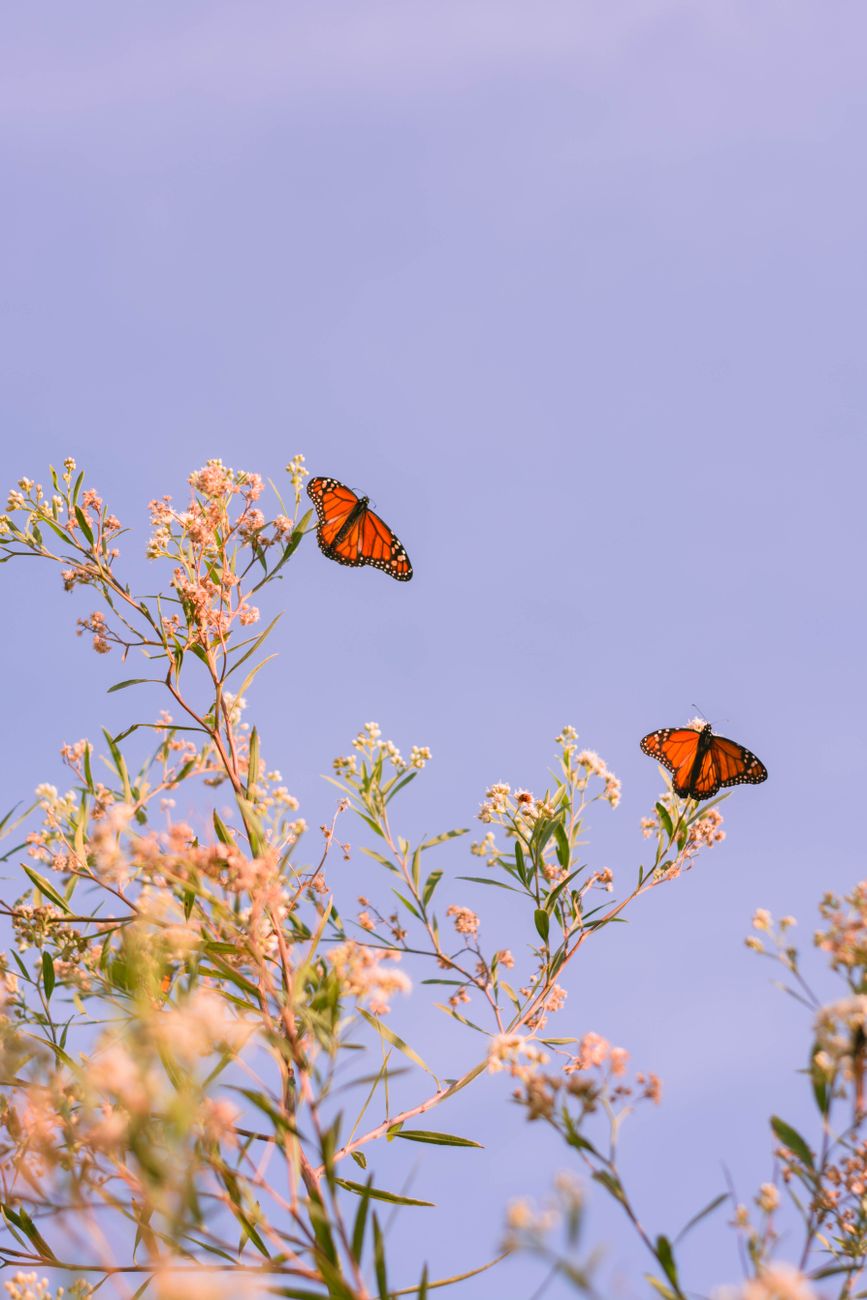
Butterflies are my sign.
Whenever I see two butterflies together I smile because, in my head, that’s Dad and Mum checking in on me. Sometimes they are real butterflies that literally stay with me through a walk and sometimes they are pictures, cards or photographs that appear unexpectedly. It doesn’t really matter whether anybody else believes it. For me they are a reminder that love doesn’t disappear just because somebody is no longer physically here.
Grief doesn’t really end.
It changes shape.
There will always be empty chairs at the table and moments when I wish my parents were still here to share something with. But I remind myself that they are here every day and I truly feel that. The sadness hasn’t disappeared, but it has softened. The loss remains, but it no longer consumes every waking moment.
Perhaps that is the nature of grief.
We don’t get over it.
We learn to carry it.
And perhaps that is the greatest gift my parents left me.
Not how to deal with grief.
But how to live with loss.
Thank you for reading.
You can find more reflections on medicine, health and life in the Posts section.


Leave a comment